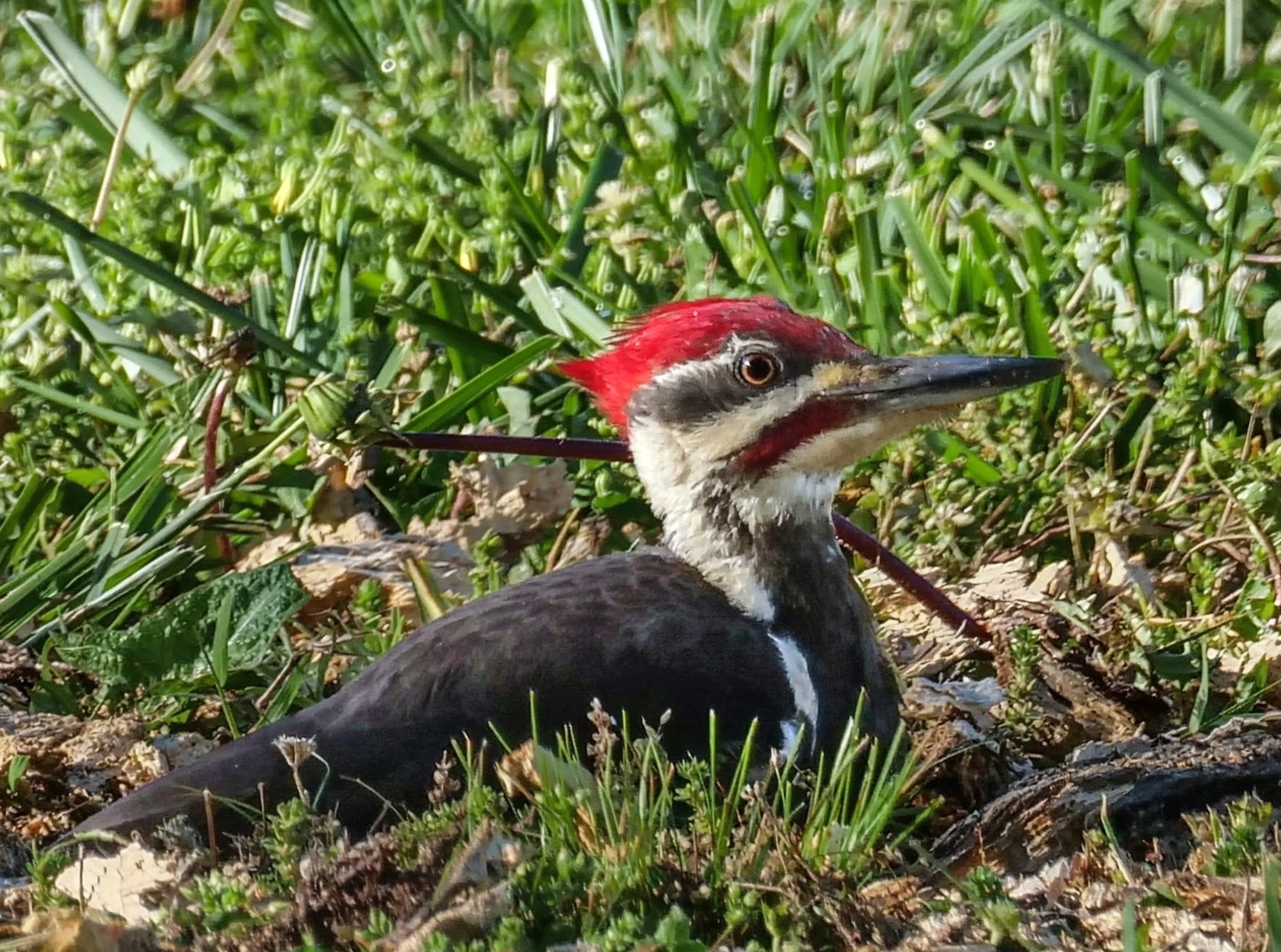
Pileated Woodpecker
Dryocopus pileatus
The largest woodpecker in North America, this crow-sized bird with its brilliant red crest is an unforgettable sight. Their loud, distinctive call echoes through mature forest — and more than once through Sunnydale Farm.
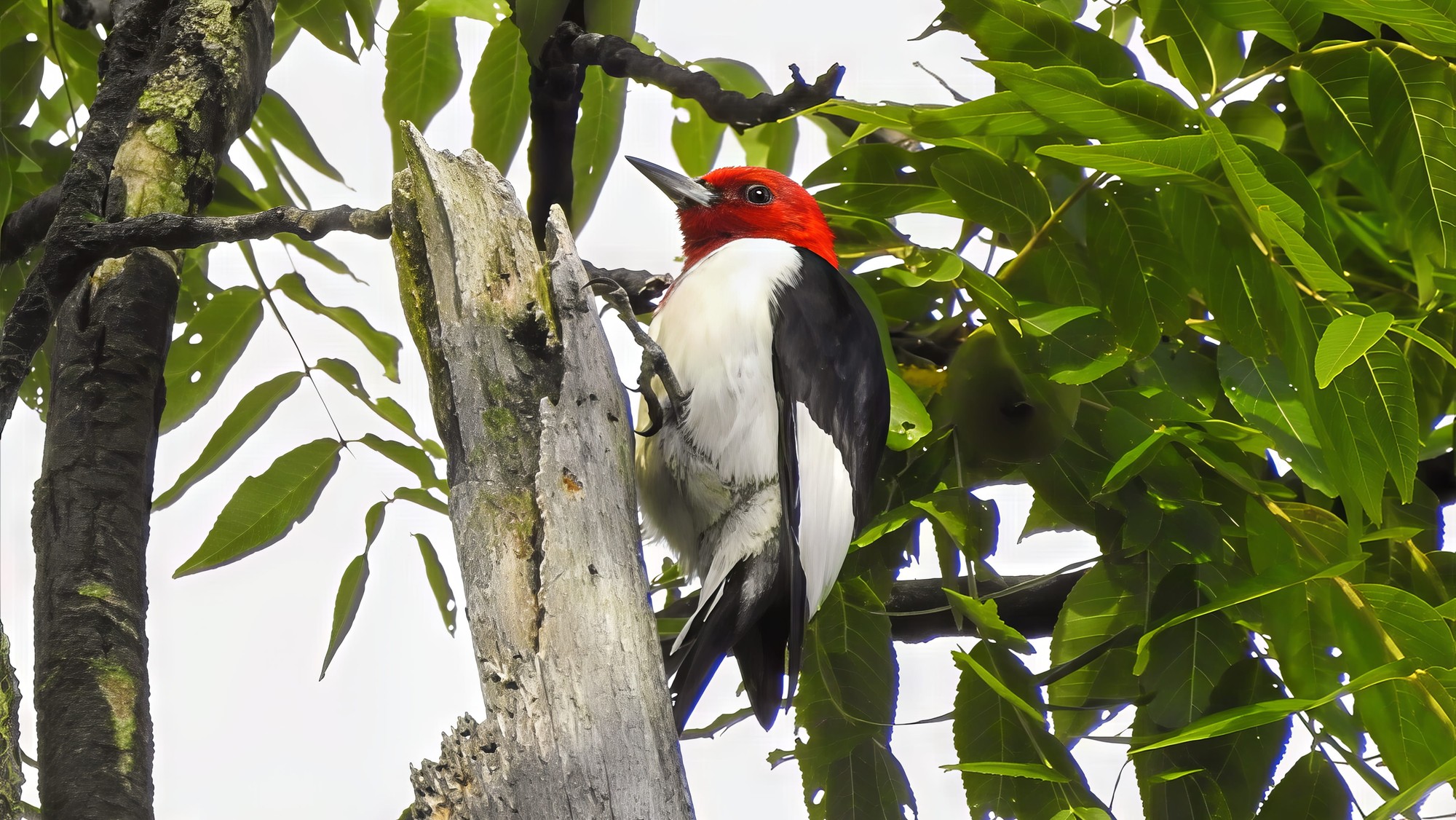
Red-headed Woodpecker
Melanerpes erythrocephalus
One of the most striking woodpeckers — bold, tri-colored plumage with a completely crimson head. A cavity nester that catches insects on the wing and stores food for winter.
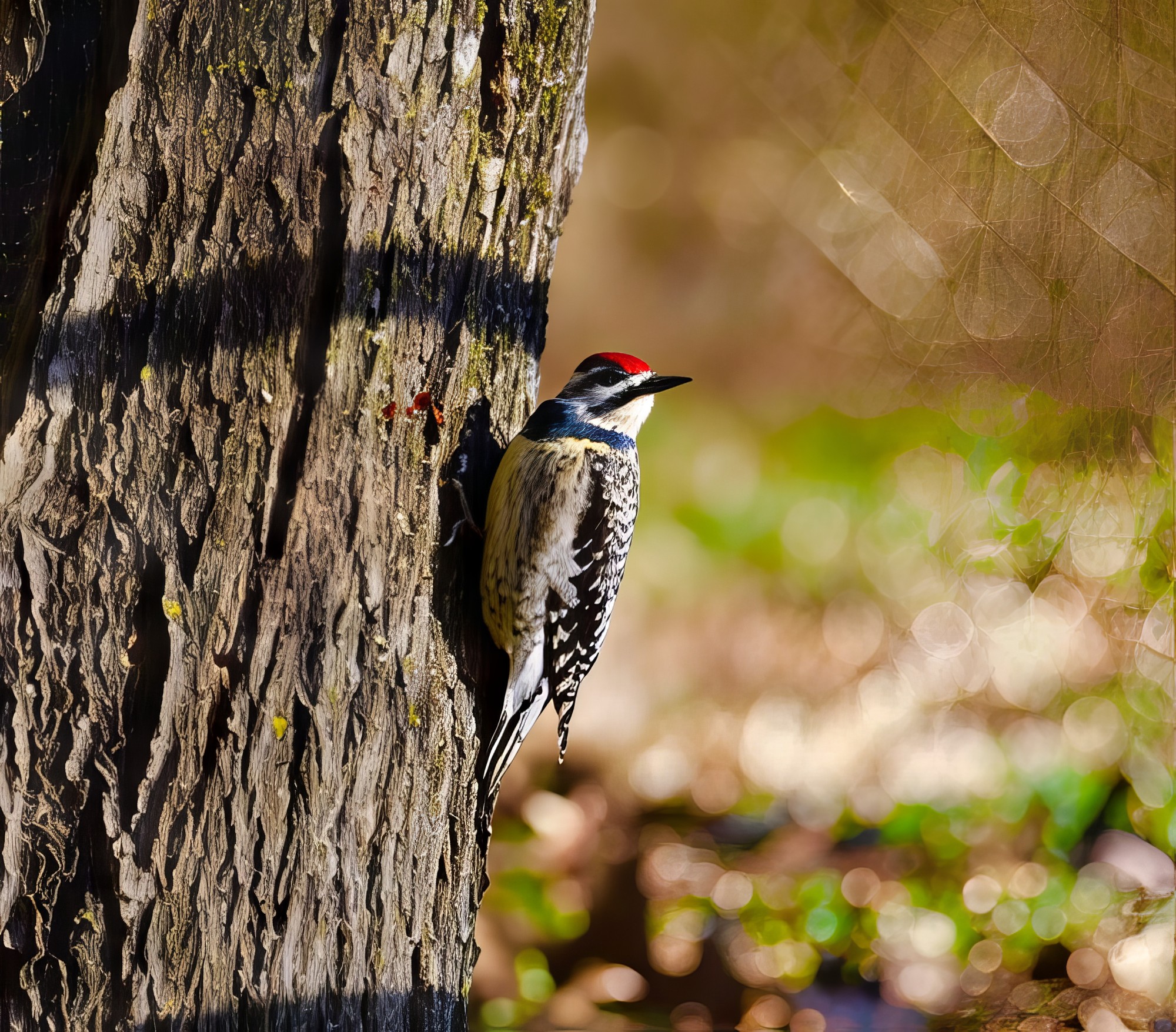
Yellow-bellied Sapsucker
Sphyrapicus varius
A migratory woodpecker that drills orderly rows of sap wells in neat horizontal lines — creating a dining table for hummingbirds, warblers, and insects alike. The male sports a bold red crown and throat.
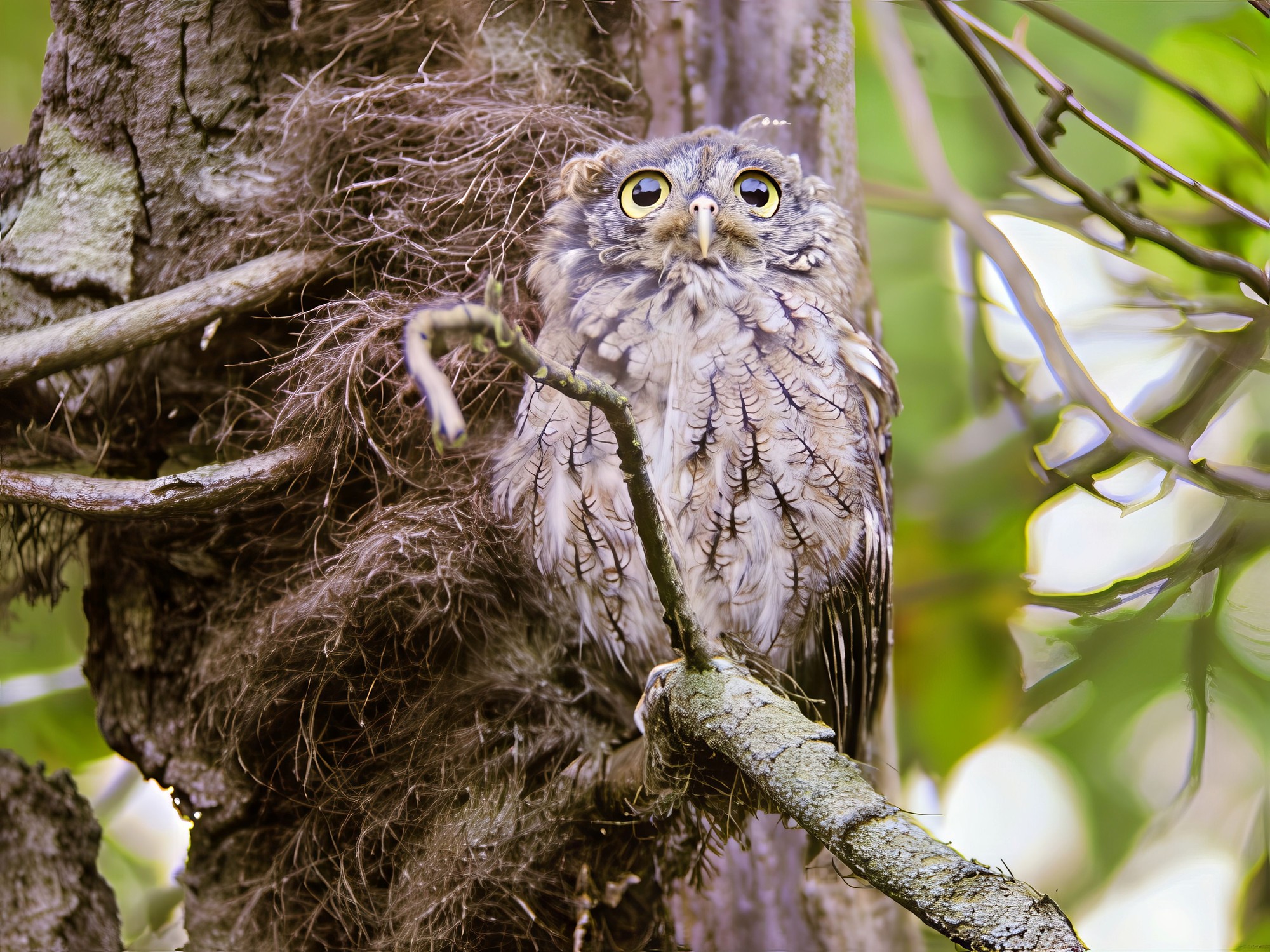
Eastern Screech-Owl
Megascops asio
One of the smallest owls in eastern North America, with ear tufts and large yellow eyes that give it a permanently startled expression. This owlet was photographed just outside its nest cavity — all fluff and wide-eyed wonder.
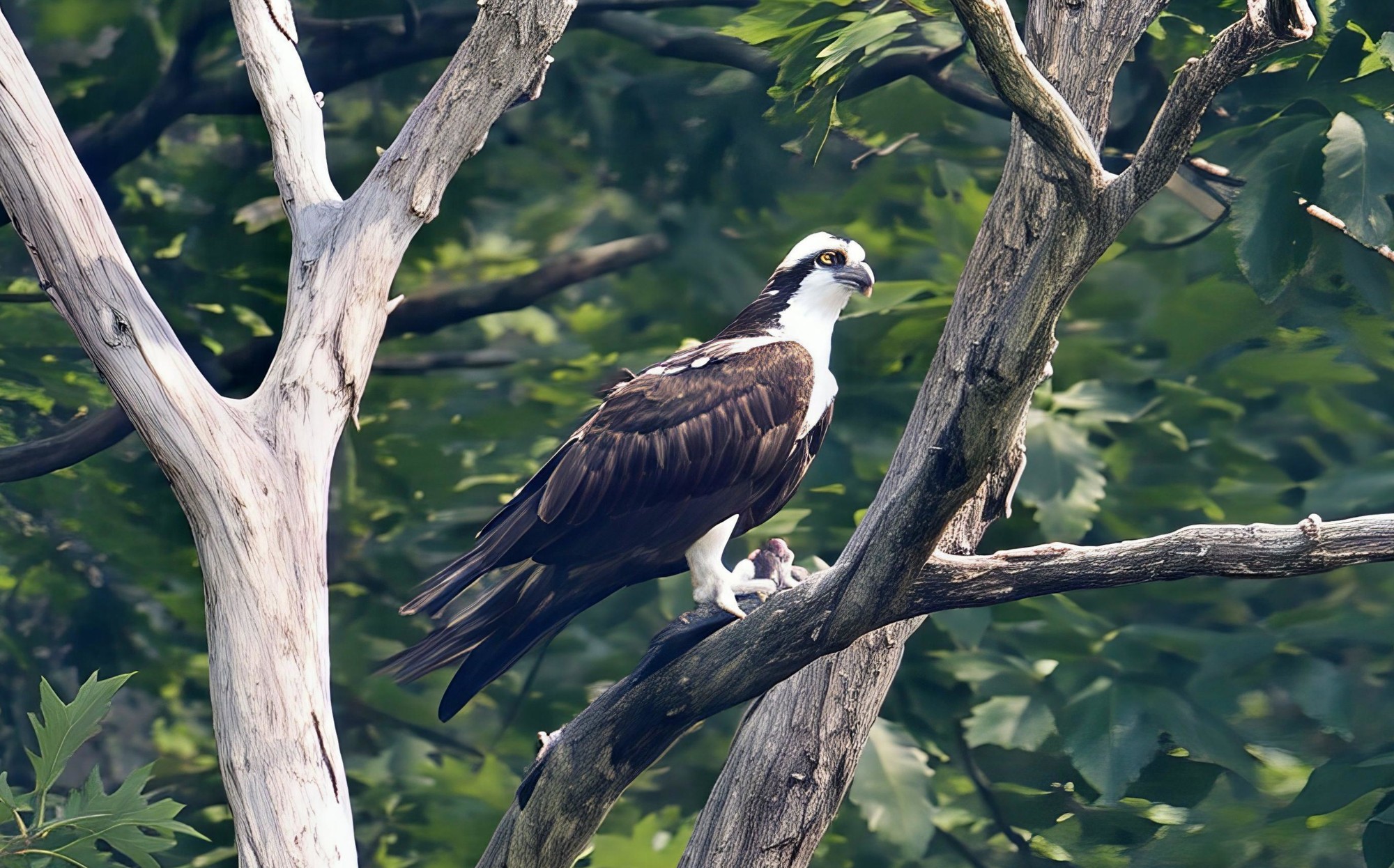
Osprey
Pandion haliaetus
The "fish hawk" — a specialized raptor that plunges feet-first into water to catch fish. Photographed both soaring overhead and perched nearby at the farm.
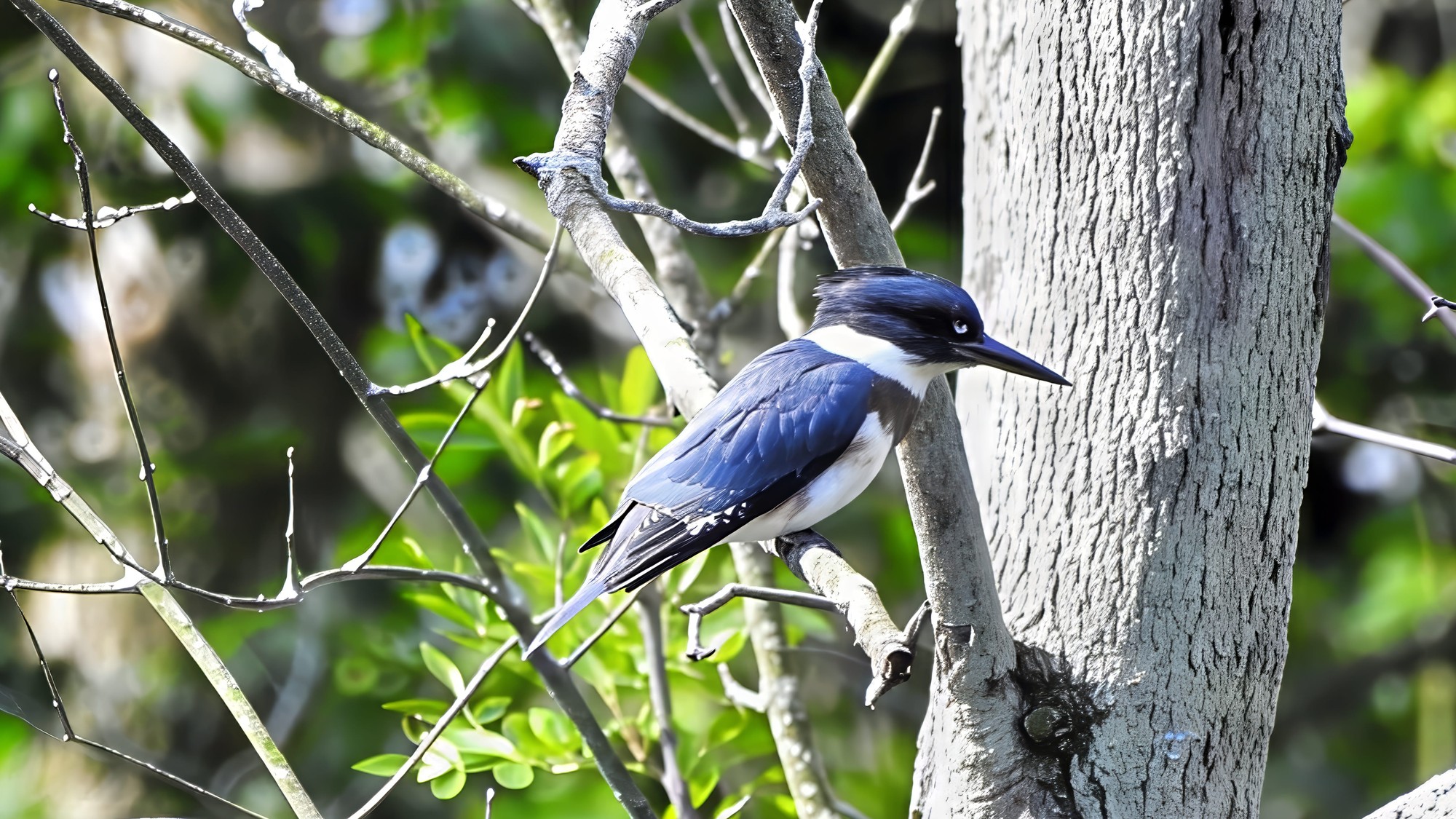
Belted Kingfisher
Megaceryle alcyon
A stocky, large-headed bird with a rattling call that announces its presence along waterways. It dives headfirst for fish with remarkable speed and precision.
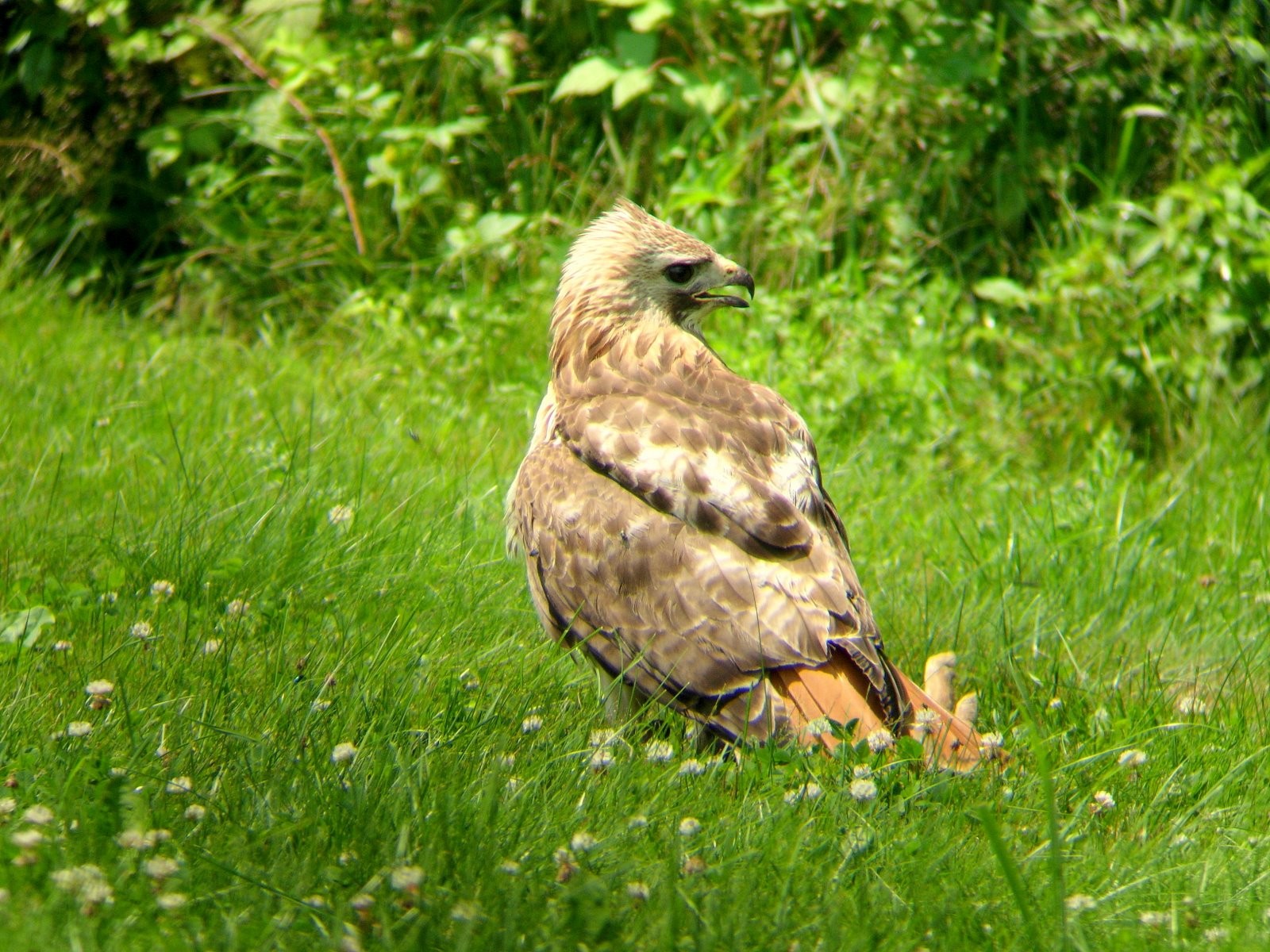
Red-tailed Hawk
Buteo jamaicensis
North America's most common and recognizable hawk, often spotted soaring on broad, rounded wings over open fields. That unmistakable brick-red tail catches the sun like a beacon. This one landed right in the clover — close enough to see every feather.
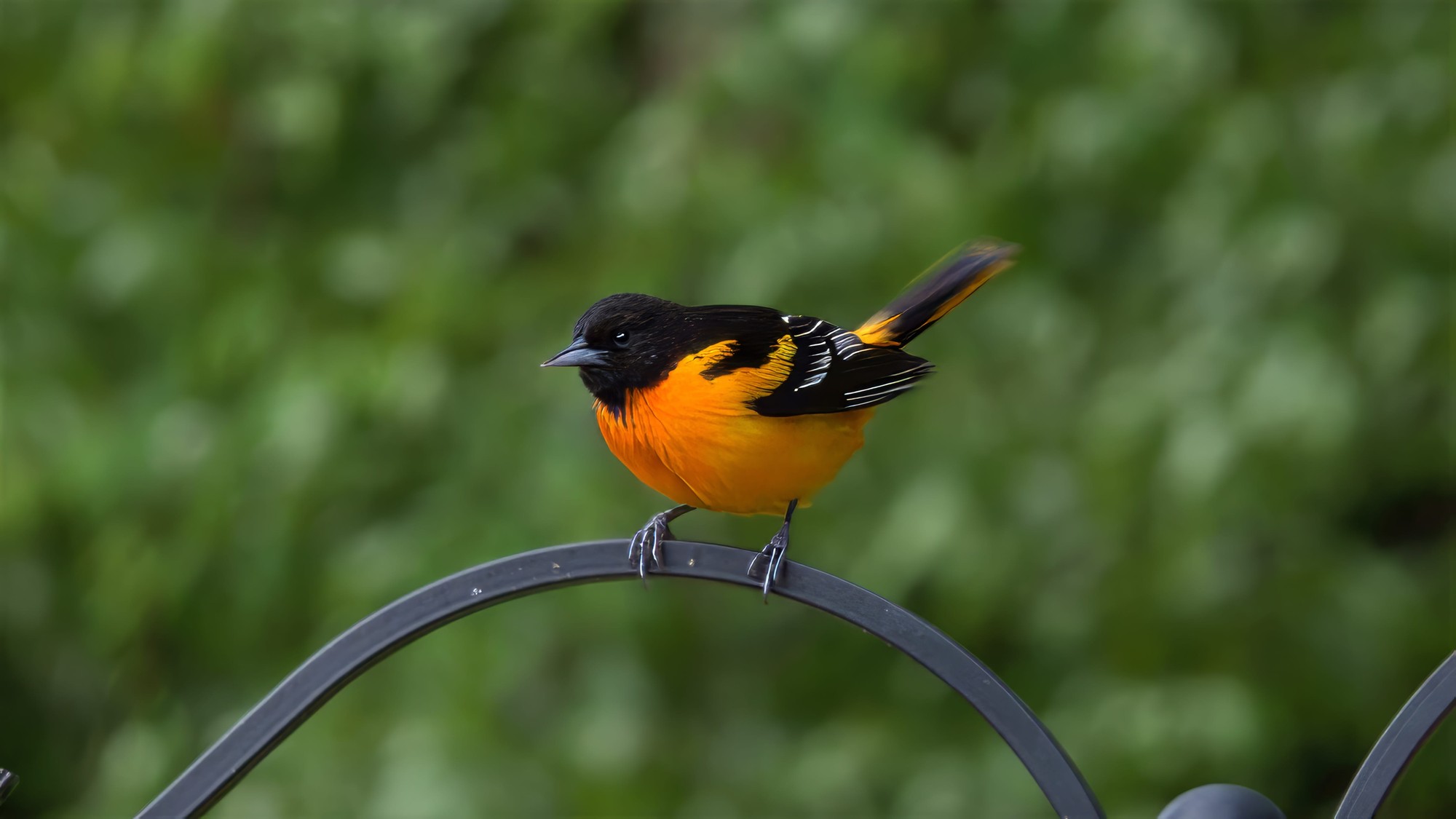
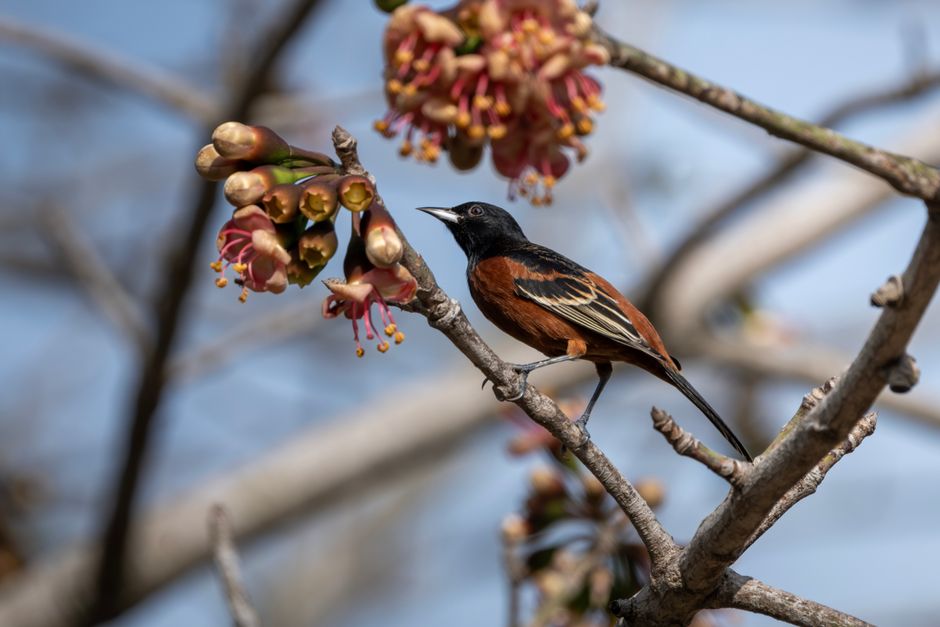
Baltimore Oriole
Icterus galbula
A burst of flame-orange and jet-black — the male Baltimore Oriole is one of the most brilliant songbirds of eastern North America. These males visited the farm feeders and posed beautifully.
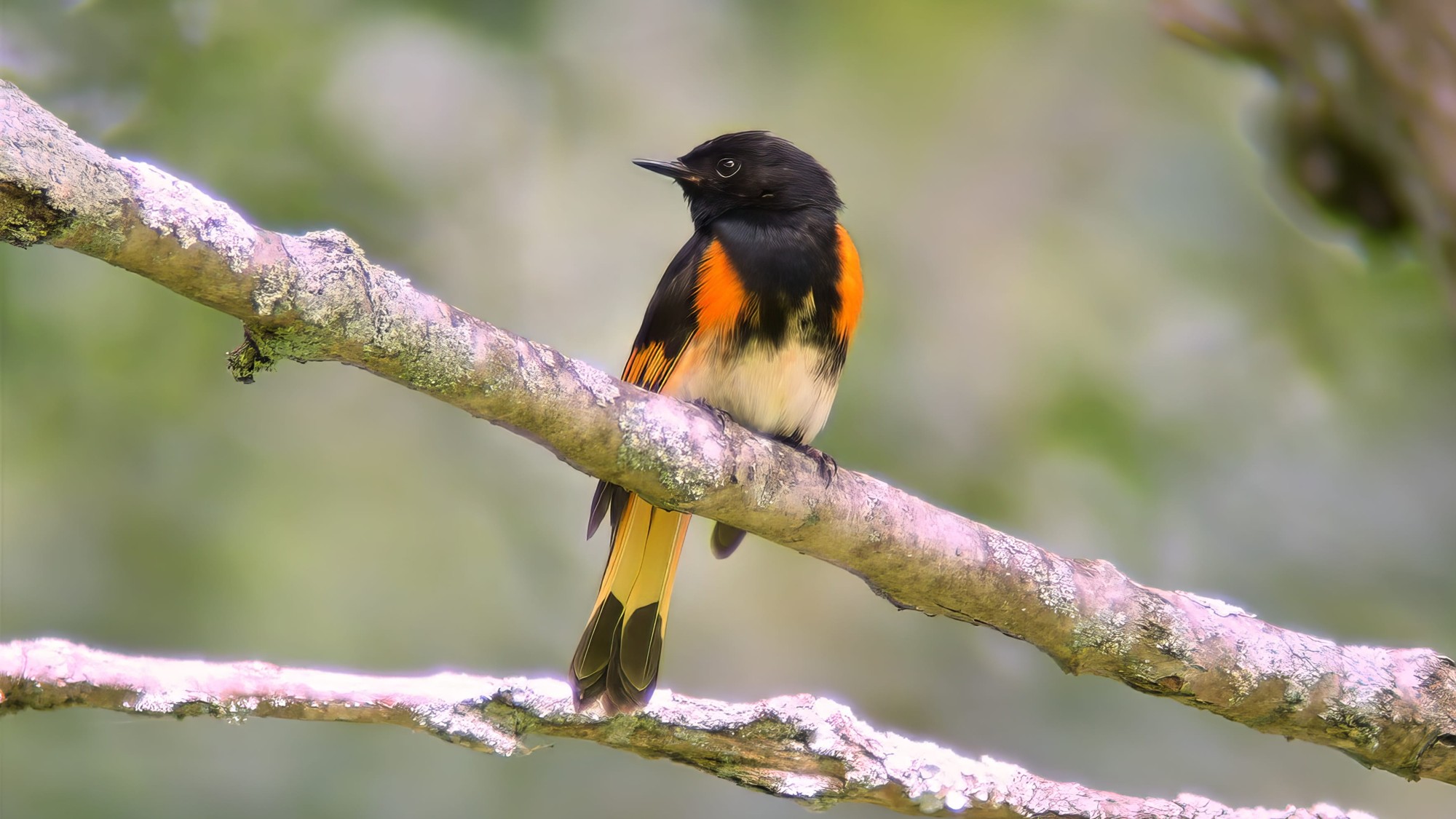
American Redstart
Setophaga ruticilla
A warbler that fans its brilliant orange-and-black tail like a butterfly, startling insects from hiding. The male is striking in jet black with vivid orange wing and tail patches.
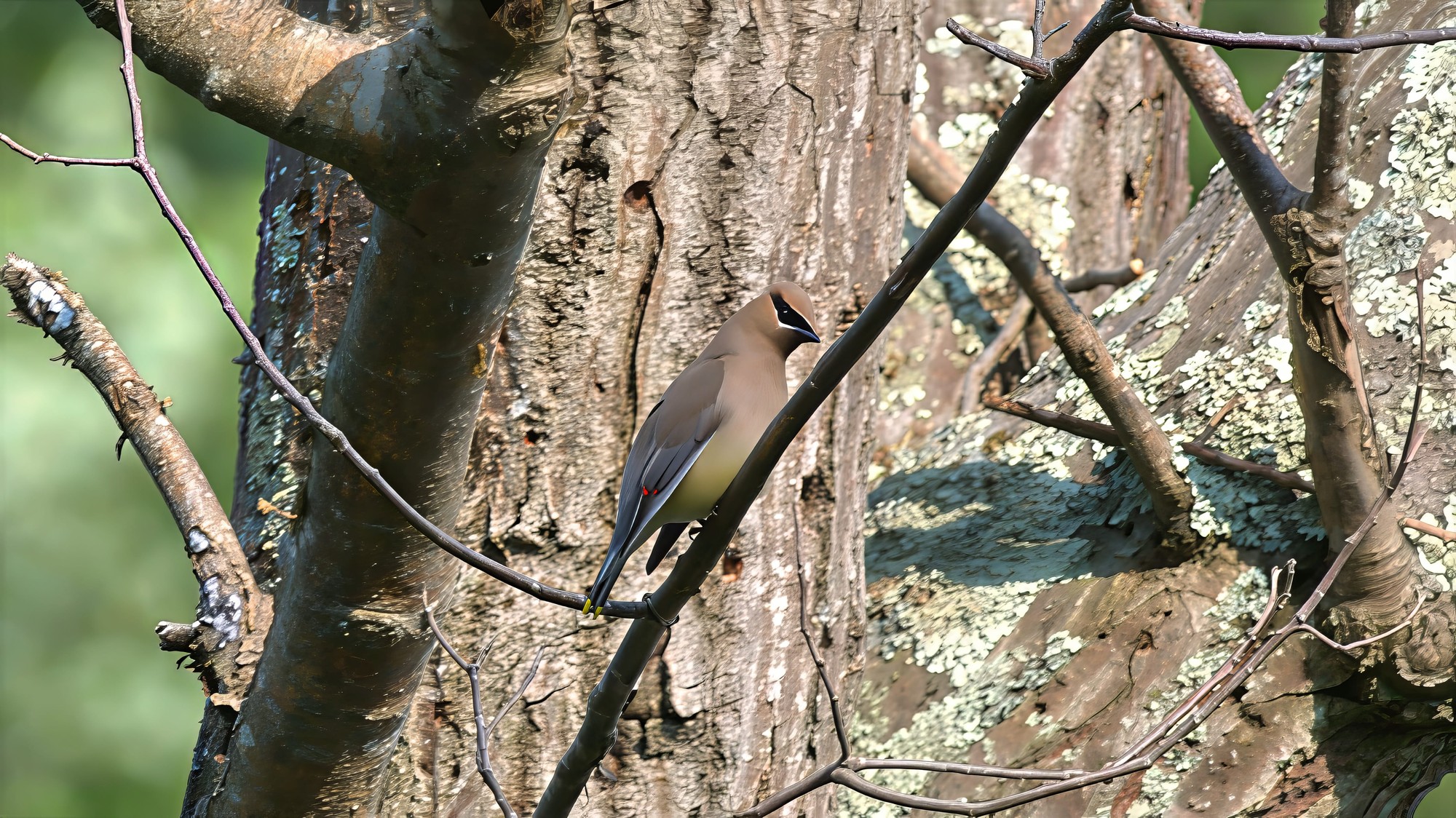
Cedar Waxwing
Bombycilla cedrorum
Sleek and elegant with a silky cinnamon crest, glossy black mask, yellow tail-tip, and the tiny red waxy droplets on its wings that give this bird its name. Cedar Waxwings are almost always seen in flocks, often traveling in pairs.
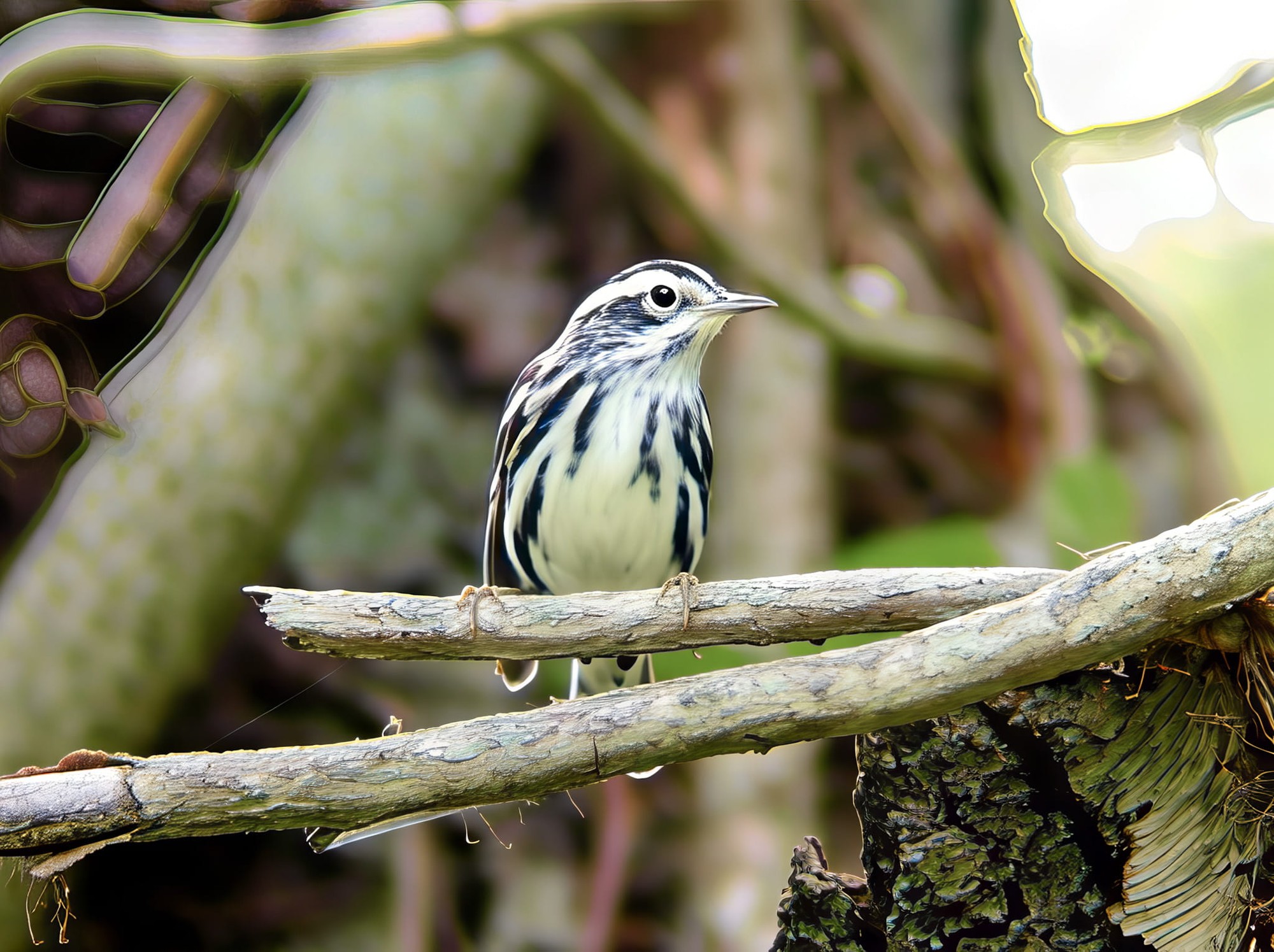
Black-and-white Warbler
Mniotilta varia
A distinctive warbler that creeps along tree trunks and branches like a nuthatch, probing bark crevices for insects. Bold black-and-white stripes make it unmistakable.
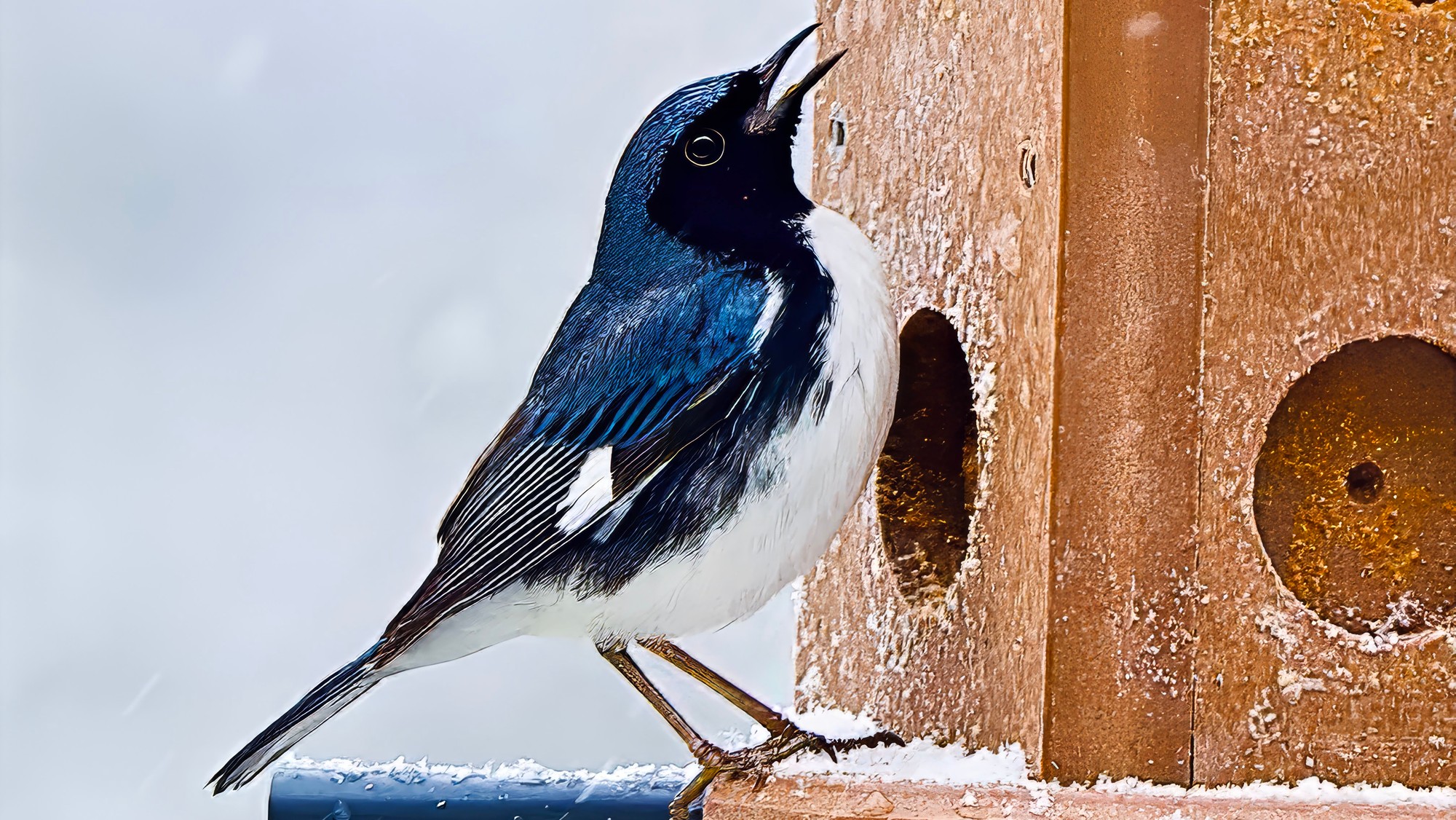
Black-throated Blue Warbler
Setophaga caerulescens
One of the most strikingly beautiful warblers in eastern North America. Males are draped in deep navy-blue with a crisp white belly and jet-black throat and cheek — a tuxedo in miniature. This male visited the feeder during a snowy day, showing off that iridescent blue plumage up close.
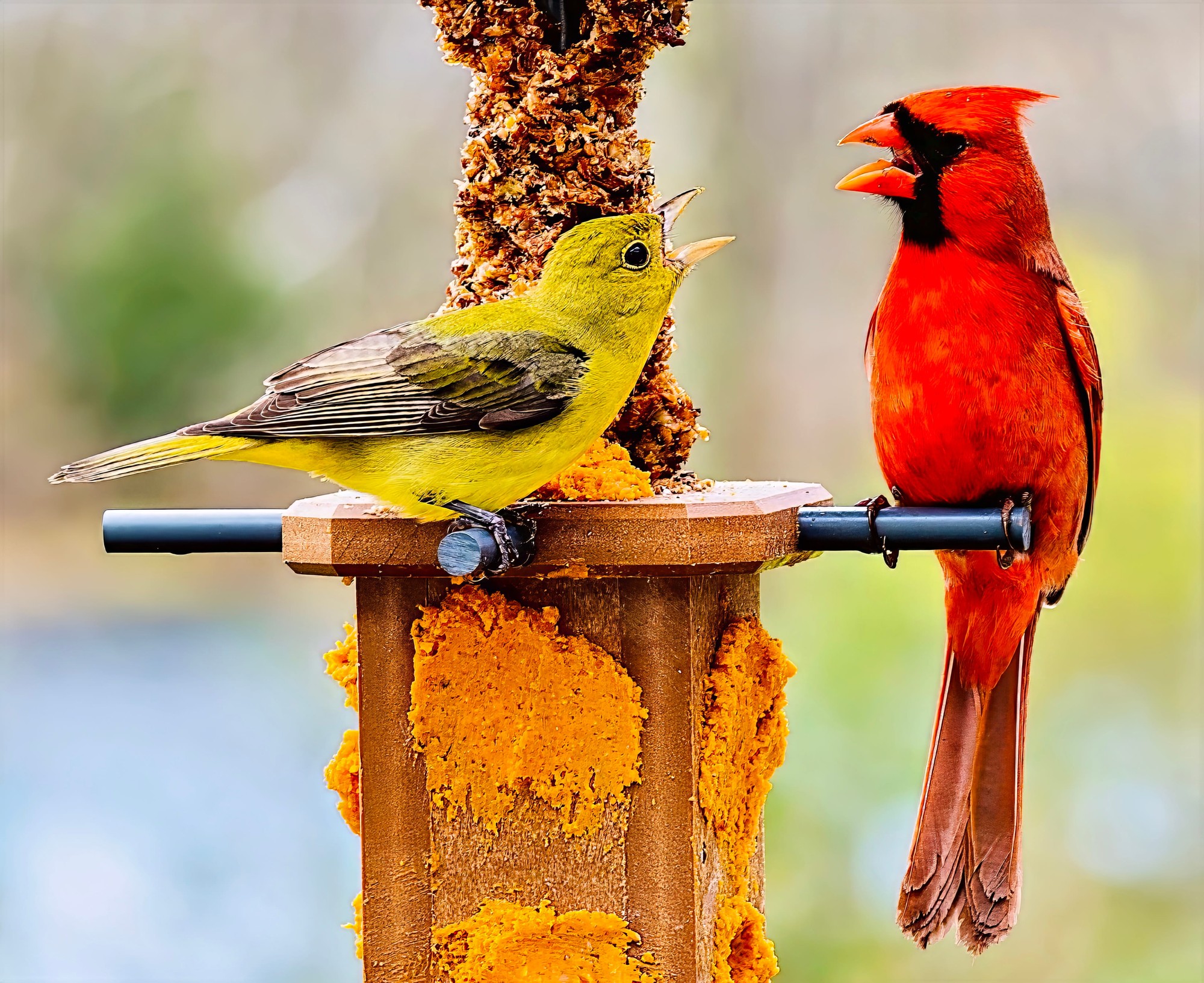
Pine Warbler & Northern Cardinal
Setophaga pinus & Cardinalis cardinalis
Two vivid visitors sharing a feeder: a bright yellow male Pine Warbler alongside a brilliant red male Northern Cardinal — a true double rainbow of feeder birds.
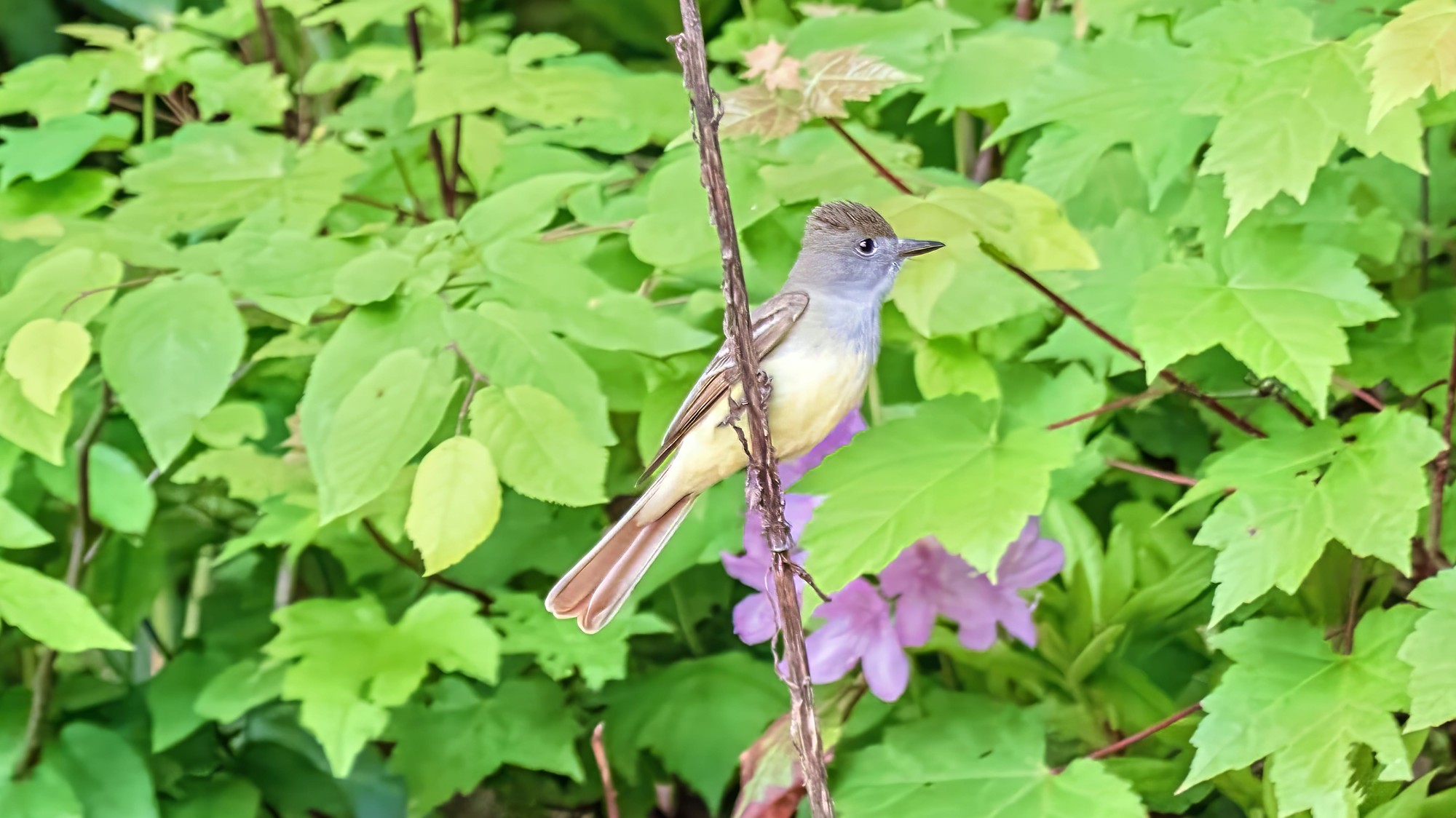
Great Crested Flycatcher
Myiarchus crinitus
The only cavity-nesting flycatcher in eastern North America. Its loud, rising "wheep!" rings through the canopy all summer. Famously incorporates shed snakeskin into its nest.
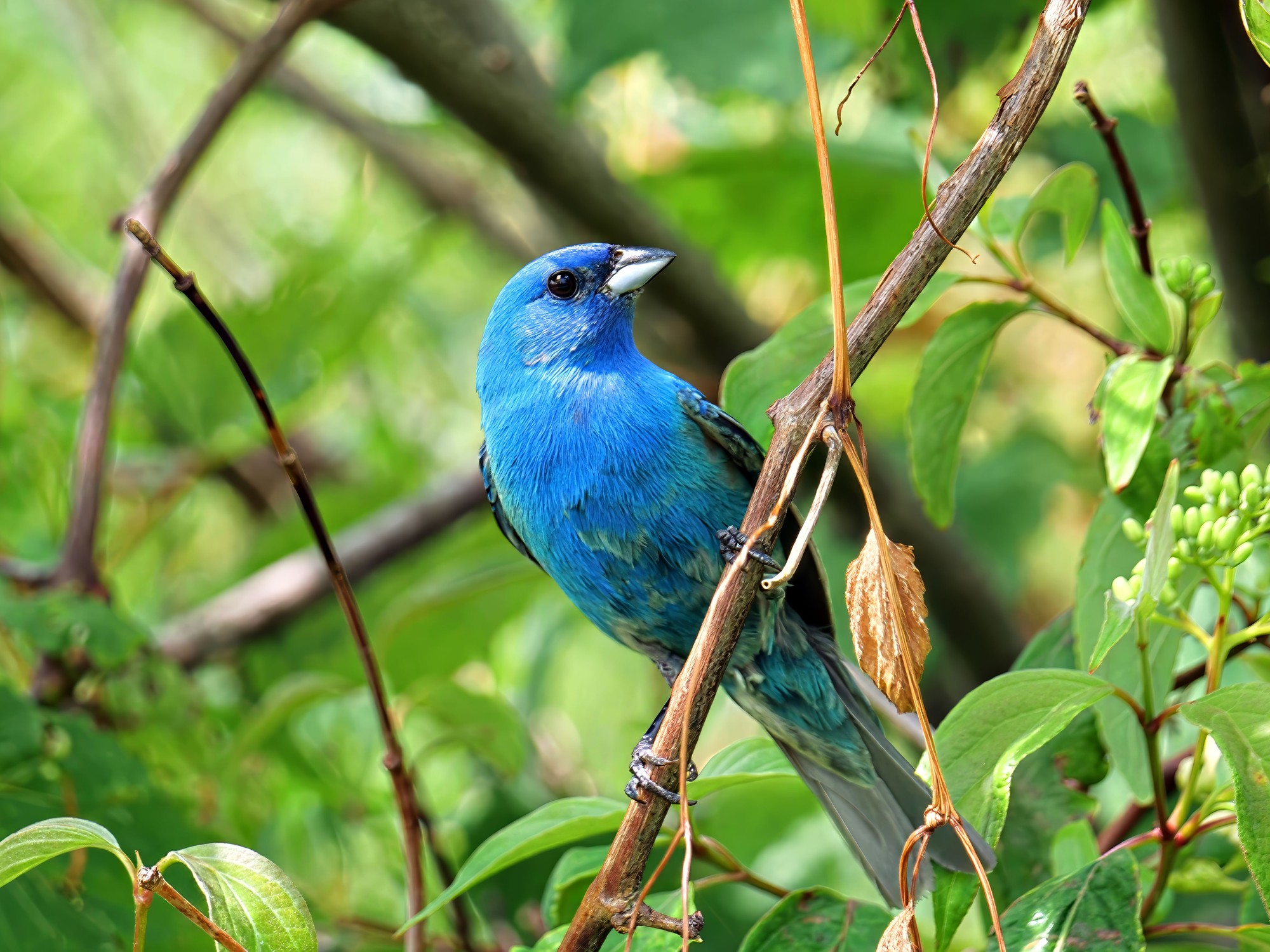
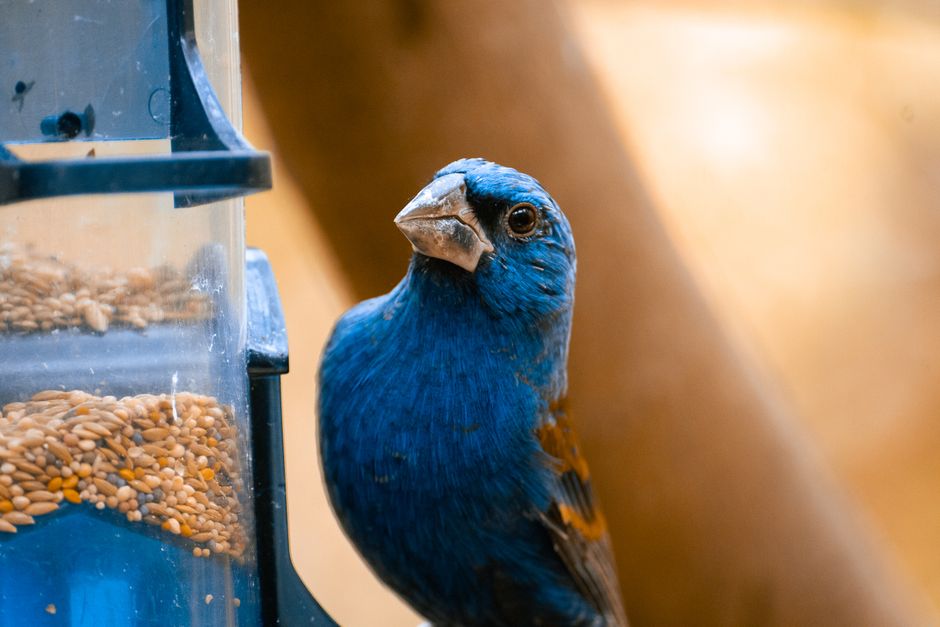
Indigo Bunting
Passerina cyanea
One of North America's most intensely blue birds — the male appears to glow, his feathers scattering light like a prism. A summer visitor to woodland edges, hedgerows, and farm margins. Sings persistently from high perches all summer long.
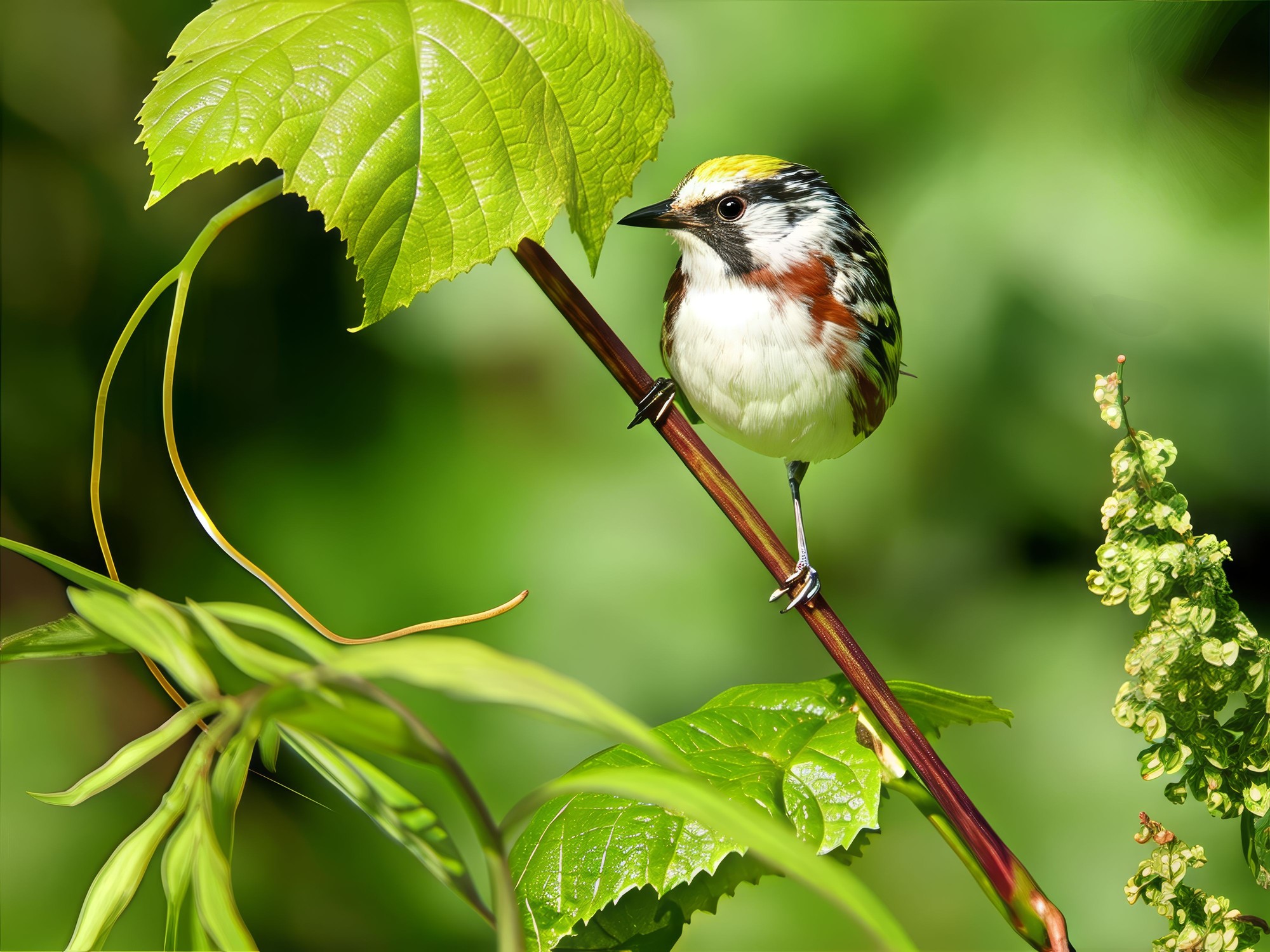
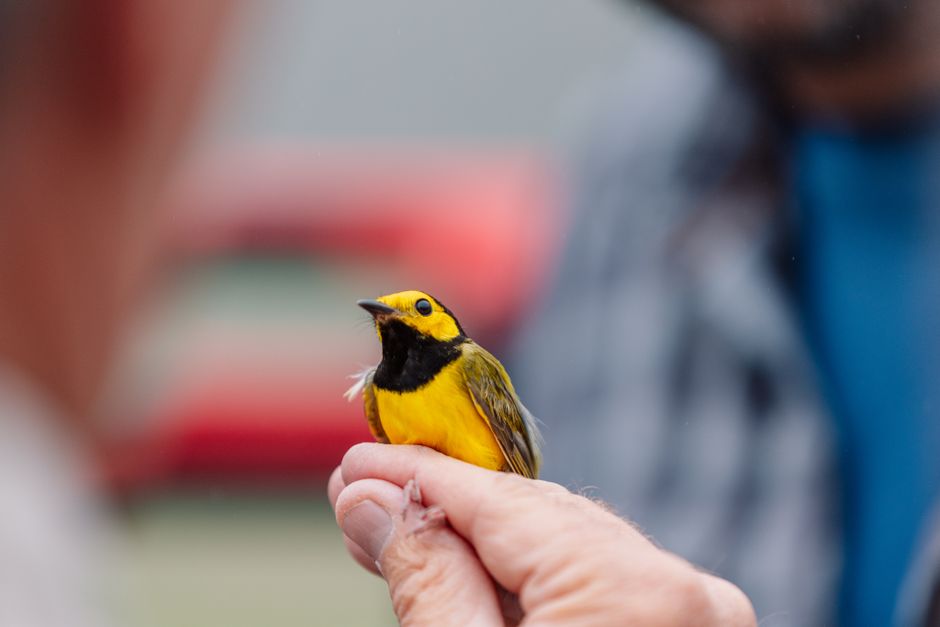
Chestnut-sided Warbler
Setophaga pensylvanica
A handsome warbler with a bright yellow crown, white cheeks, and rich chestnut streaks down its sides. Males sing a cheerful "pleased-pleased-pleased-to-MEETCHA" from thickets and forest edges during migration.
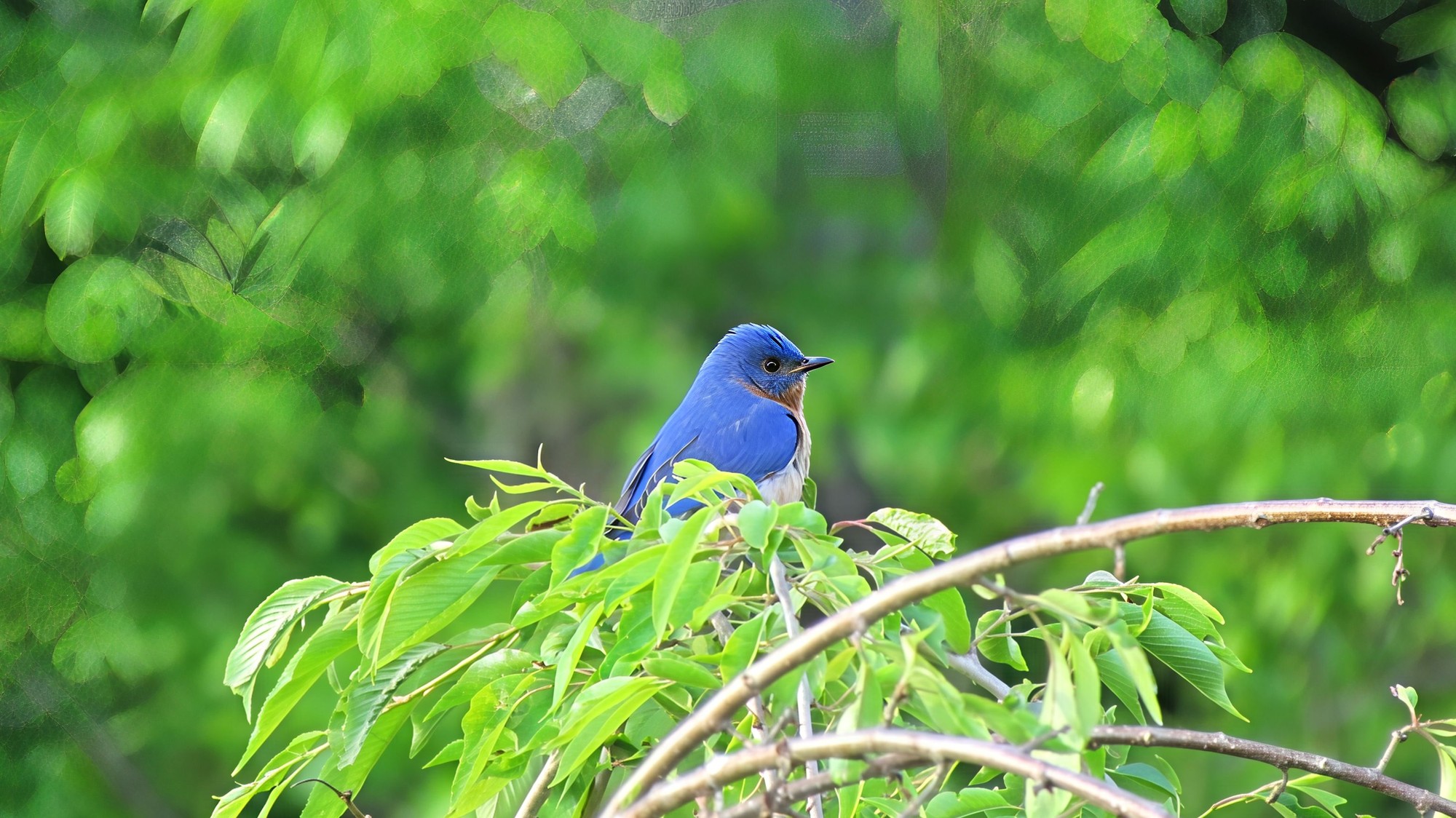
Eastern Bluebird
Sialia sialis
A symbol of happiness and good fortune — the male Eastern Bluebird wears sky-blue above and warm cinnamon below. Once rare due to competition for nest cavities, bluebird box programs have helped this beloved species thrive.
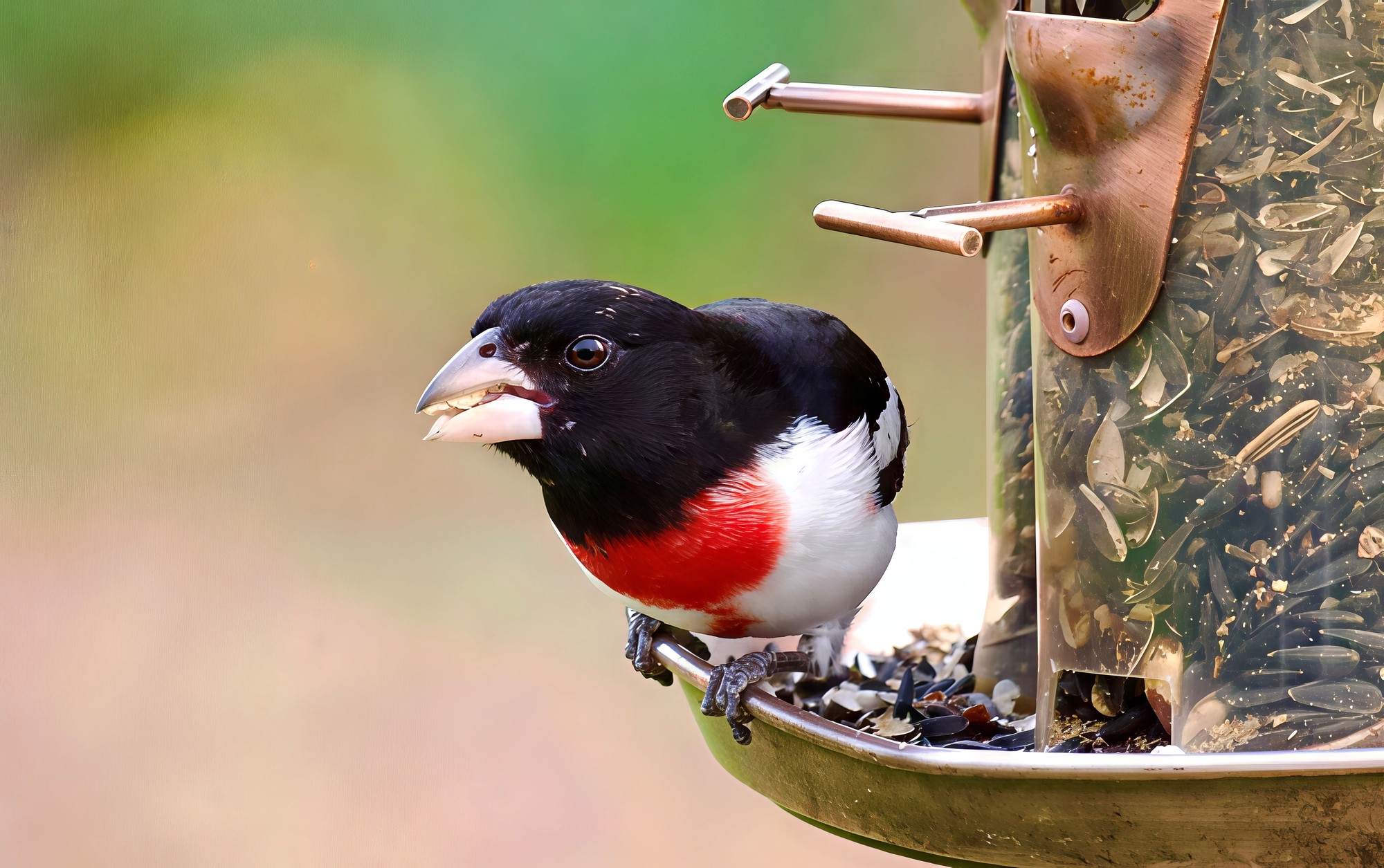
Rose-breasted Grosbeak
Pheucticus ludovicianus
A showstopper at the feeder — the male is black and white with a vivid rose-red triangle blazing on his breast. His rich, melodious song is like a robin who has taken singing lessons. A sure sign of spring migration.
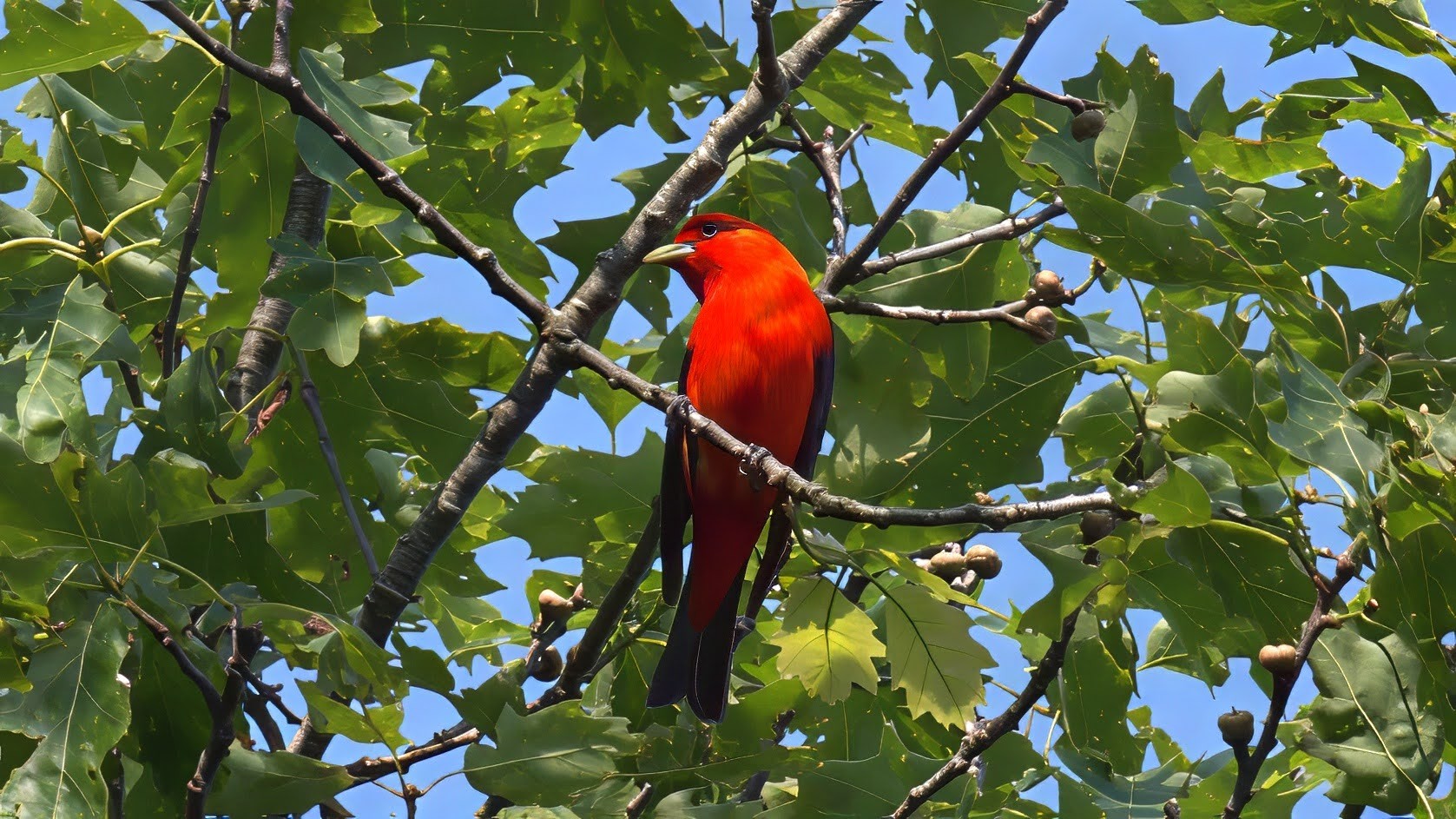
Scarlet Tanager
Piranga olivacea
Arguably the most brilliant bird of the eastern forest — a male in breeding plumage is an almost unreal combination of blazing scarlet and jet-black wings. Despite his color, he hides surprisingly well in leafy canopy.
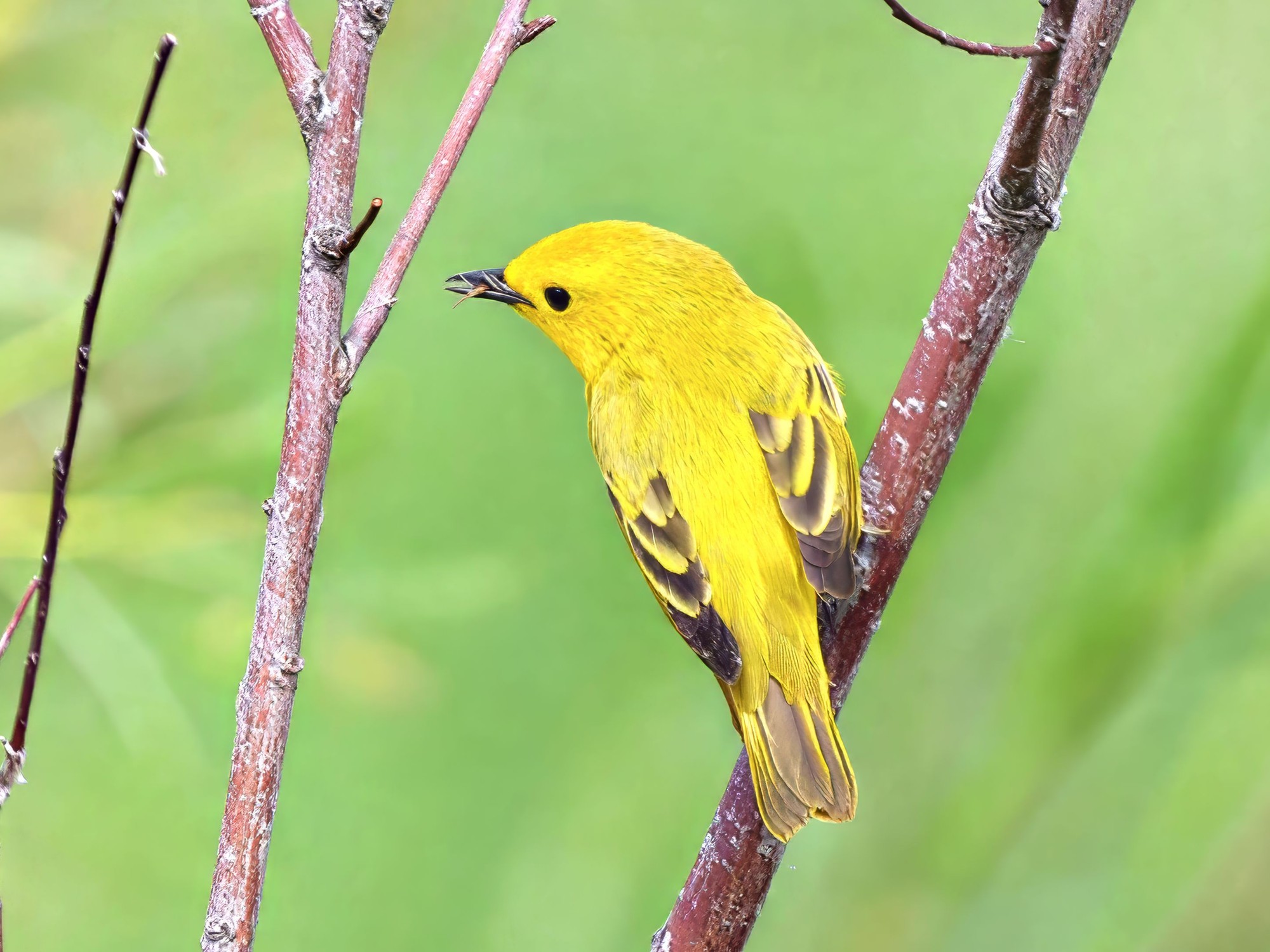
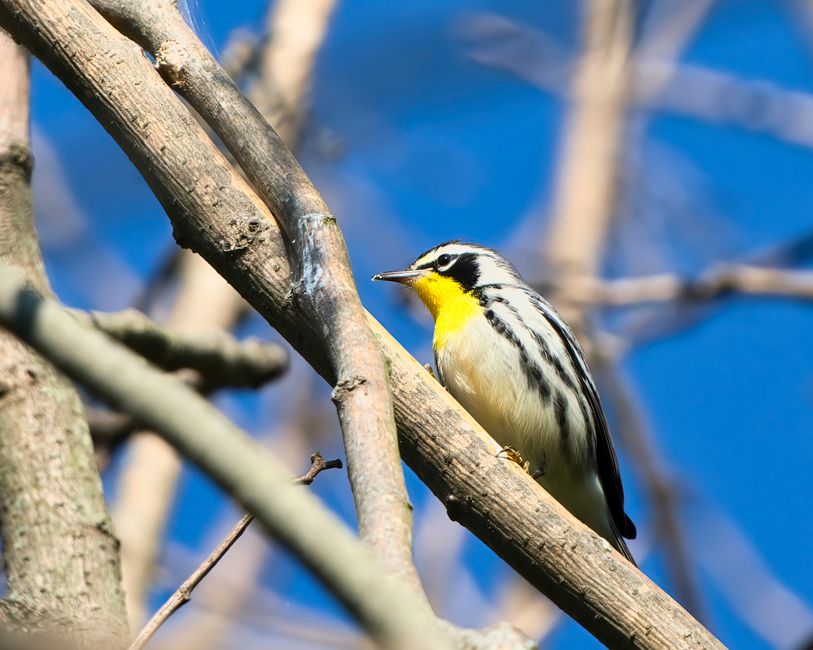
Yellow Warbler
Setophaga petechia
Pure sunshine on a branch — the Yellow Warbler is one of the most widespread warblers in North America. Males sing a cheerful "sweet-sweet-sweet" from willows and shrubby edges near water.
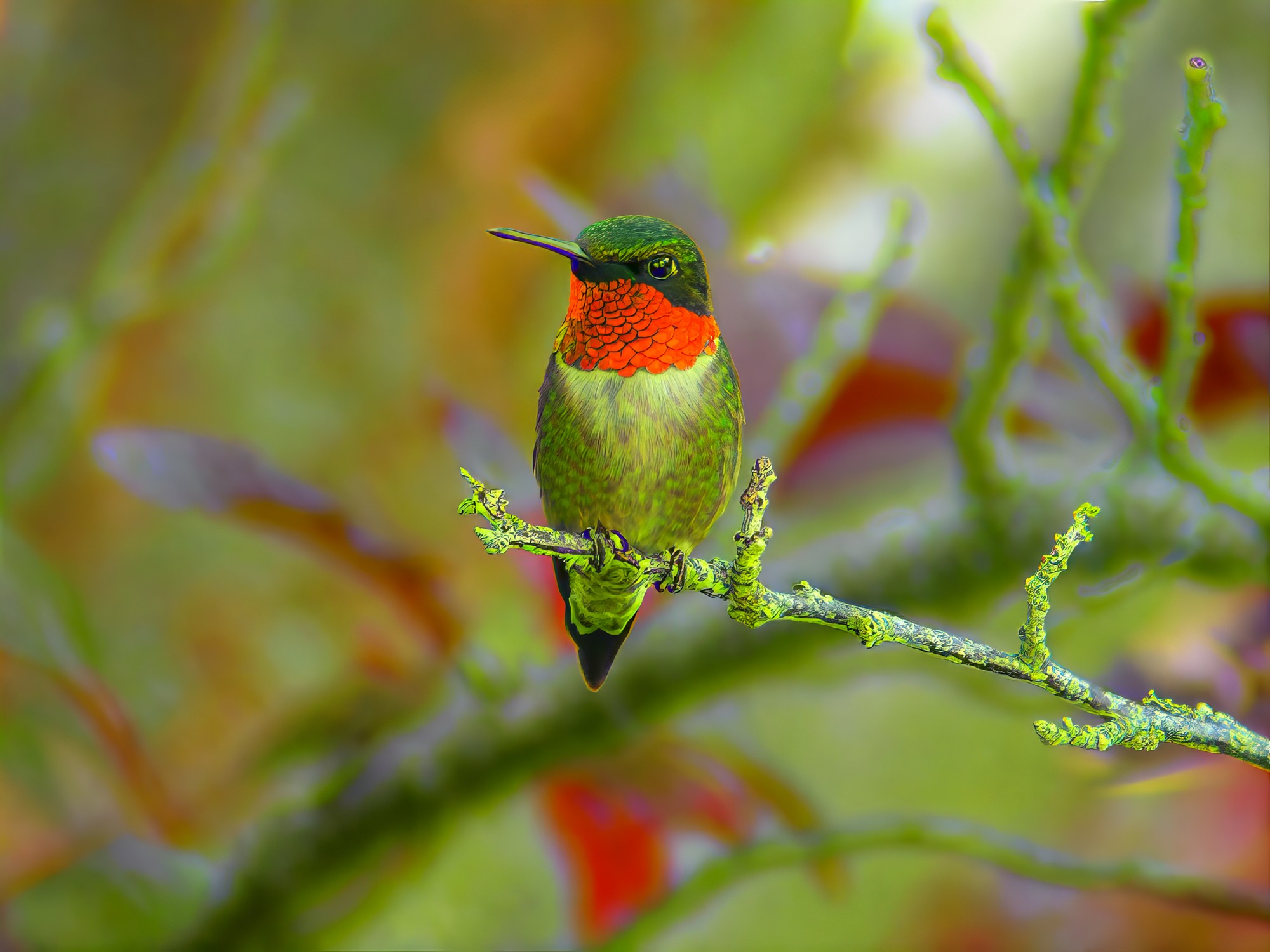
Ruby-throated Hummingbird
Archilochus colubris
The only hummingbird that breeds east of the Mississippi. Males sport a brilliant iridescent ruby-red gorget that blazes like a jewel in sunlight. Incredibly agile — they can hover, fly backwards, and beat their wings up to 80 times per second.
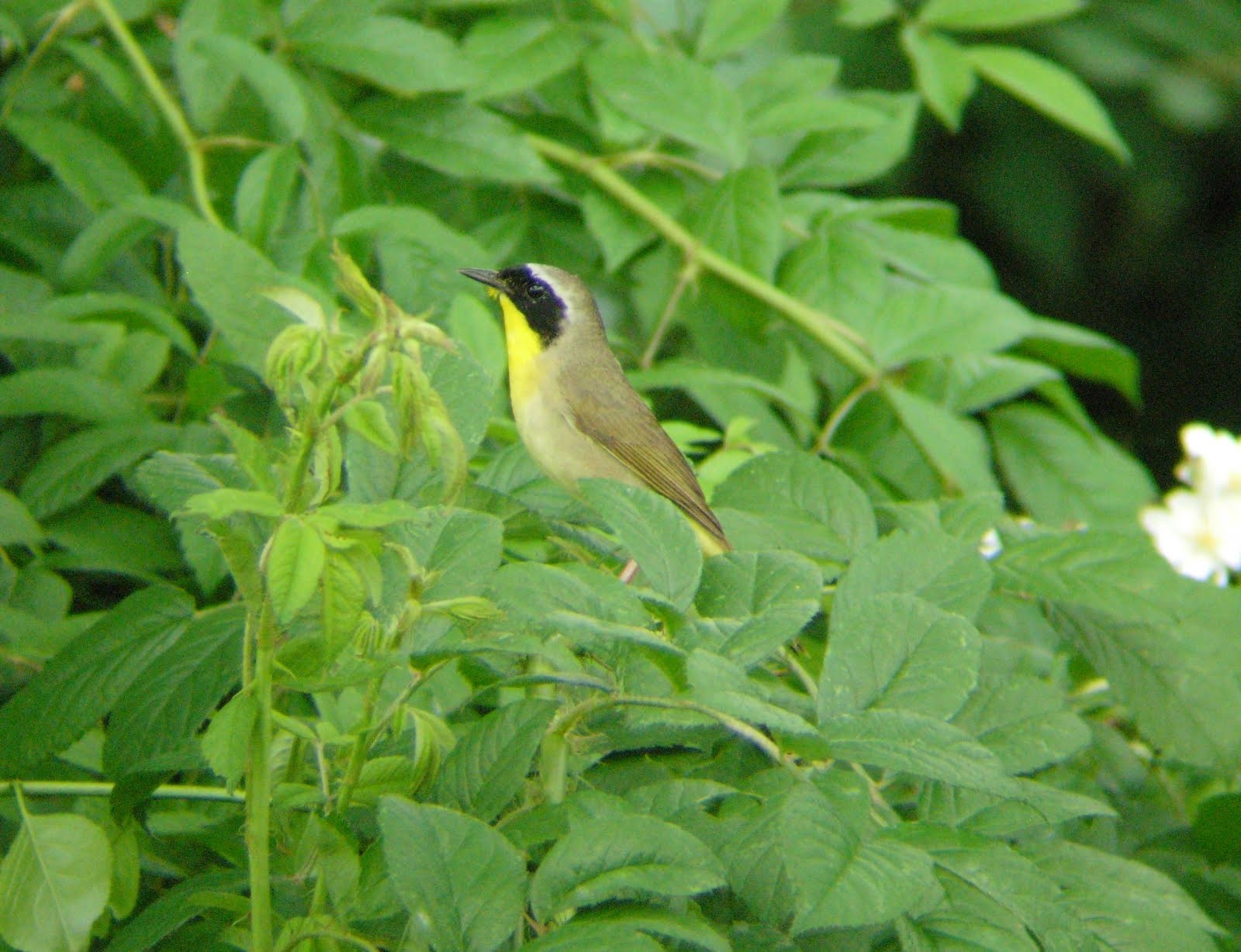
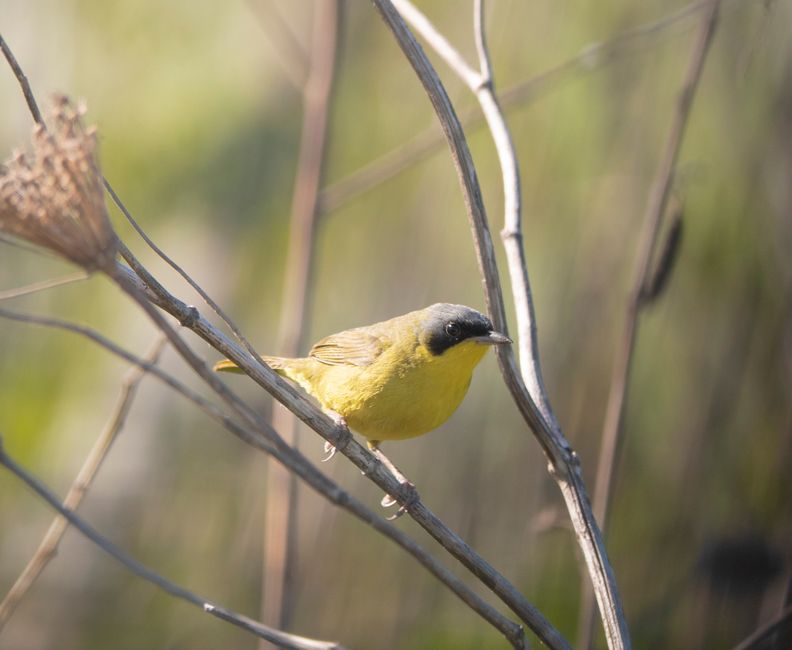
Common Yellowthroat
Geothlypis trichas
The masked bandit of the marshes — males wear a striking black mask and yellow throat. One of North America's most widespread warblers, haunting wetland edges and brushy fields.
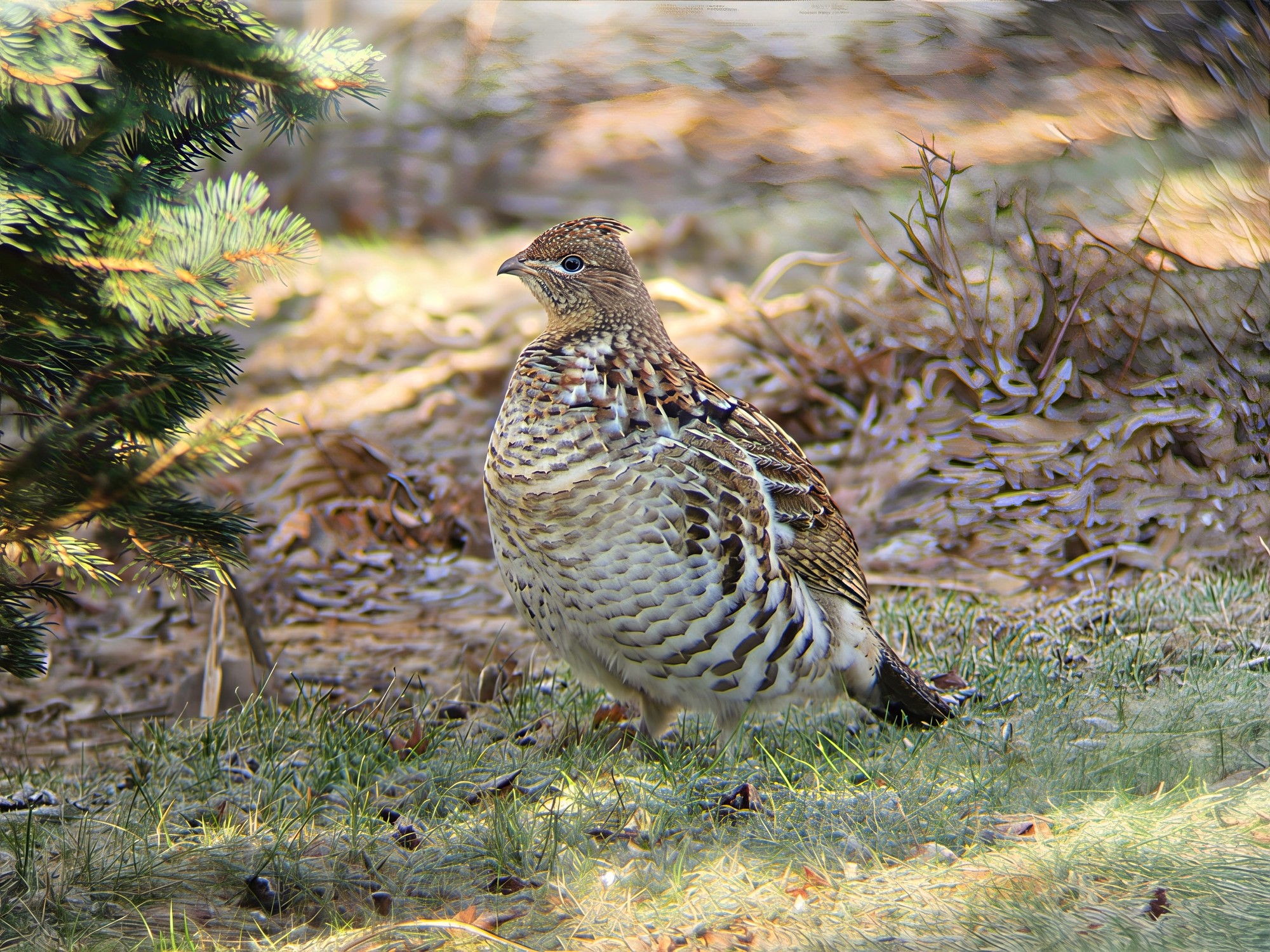
Ruffed Grouse
Bonasa umbellus
A master of camouflage in the forest understory. Males produce a remarkable low-frequency drumming sound in spring by beating their wings — more felt than heard.
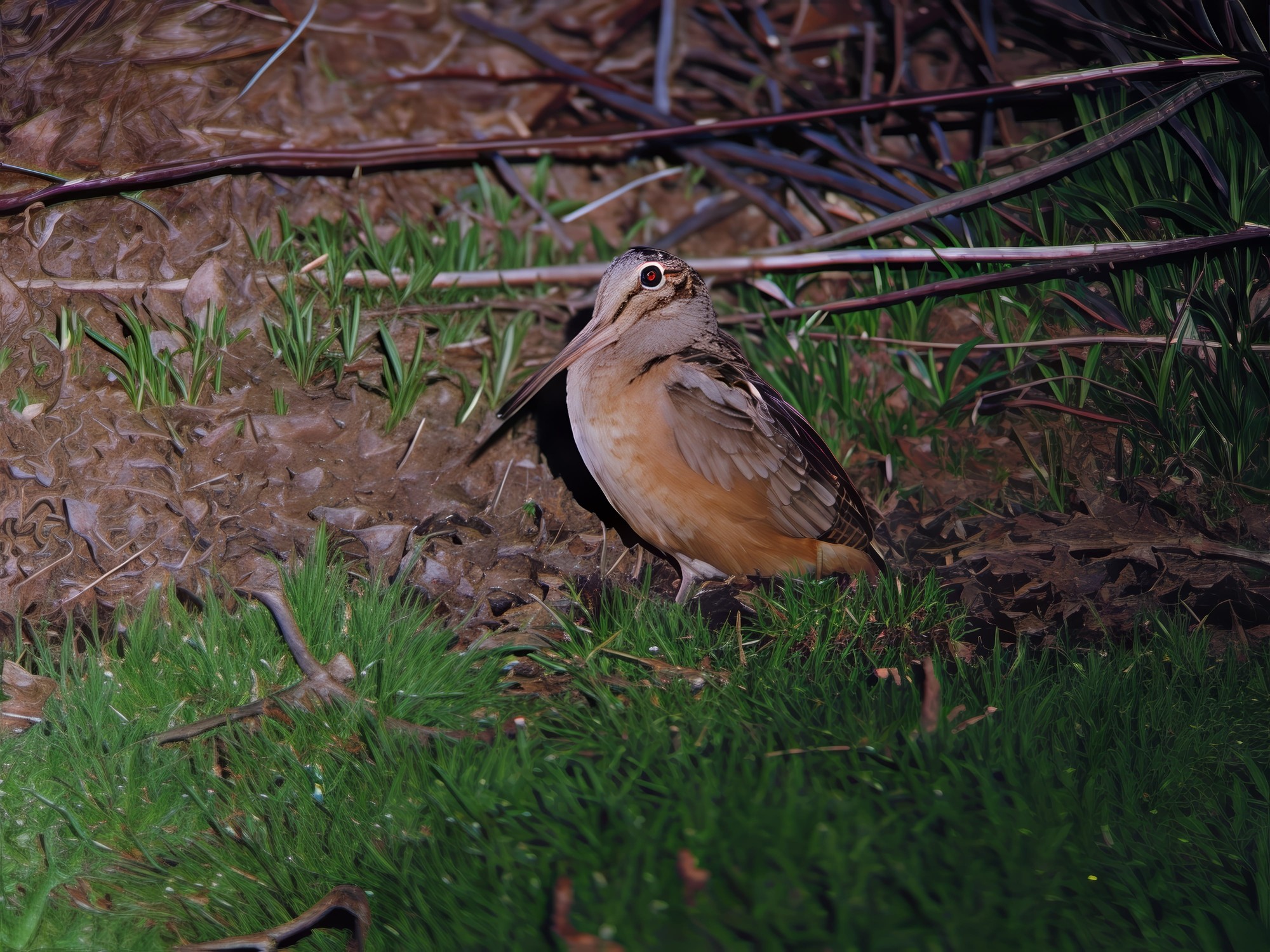
American Woodcock
Scolopax minor
A plump, secretive shorebird of moist woodlands, famous for its enchanting "sky dance" display flights at dusk in early spring. Enormous eyes give it nearly 360° vision.
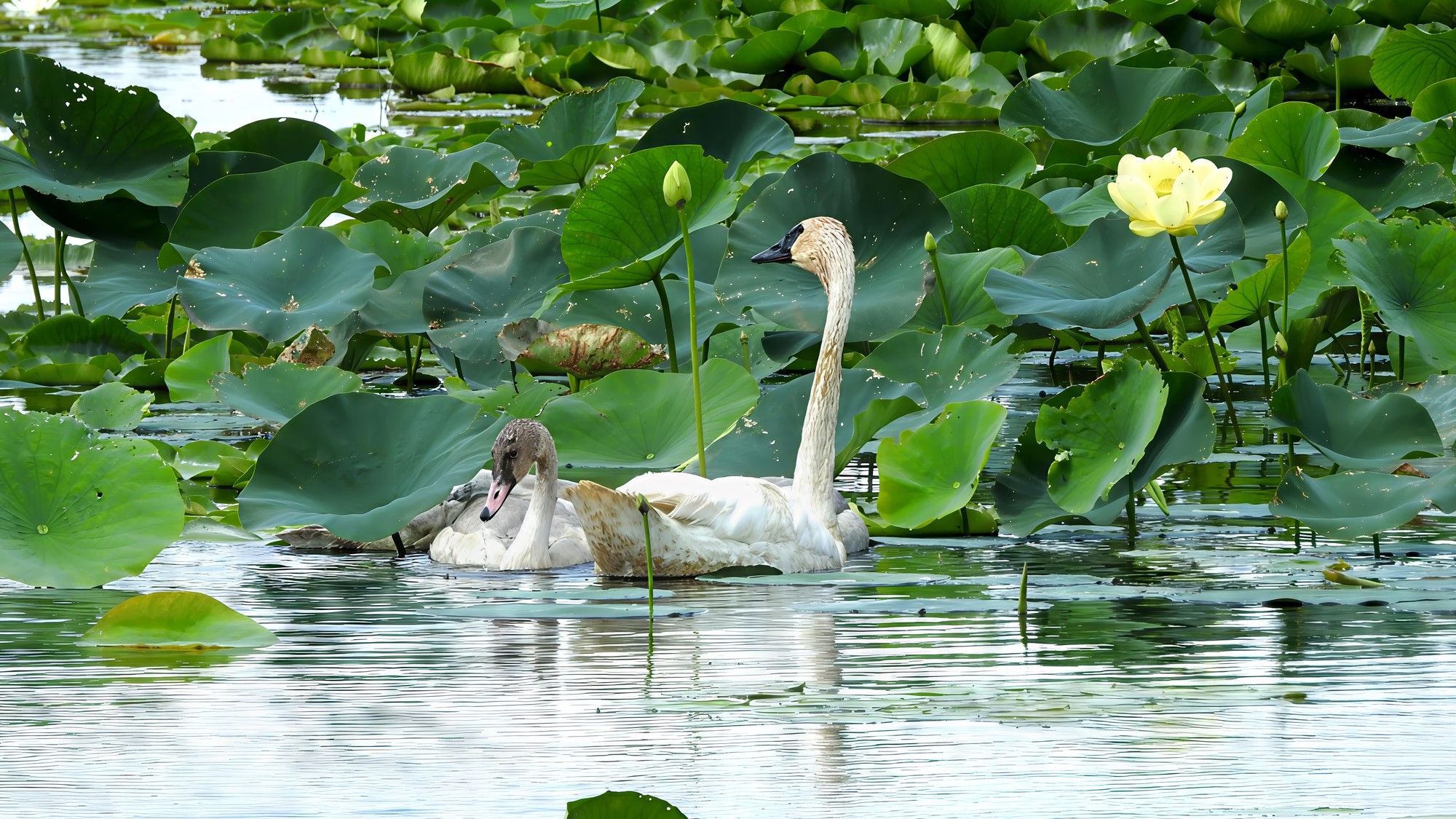
Trumpeter Swans
Cygnus buccinator
North America's largest native waterfowl — with an 8-foot wingspan — and once nearly extinct. This stunning adult and cygnet were photographed among blooming American lotus flowers.
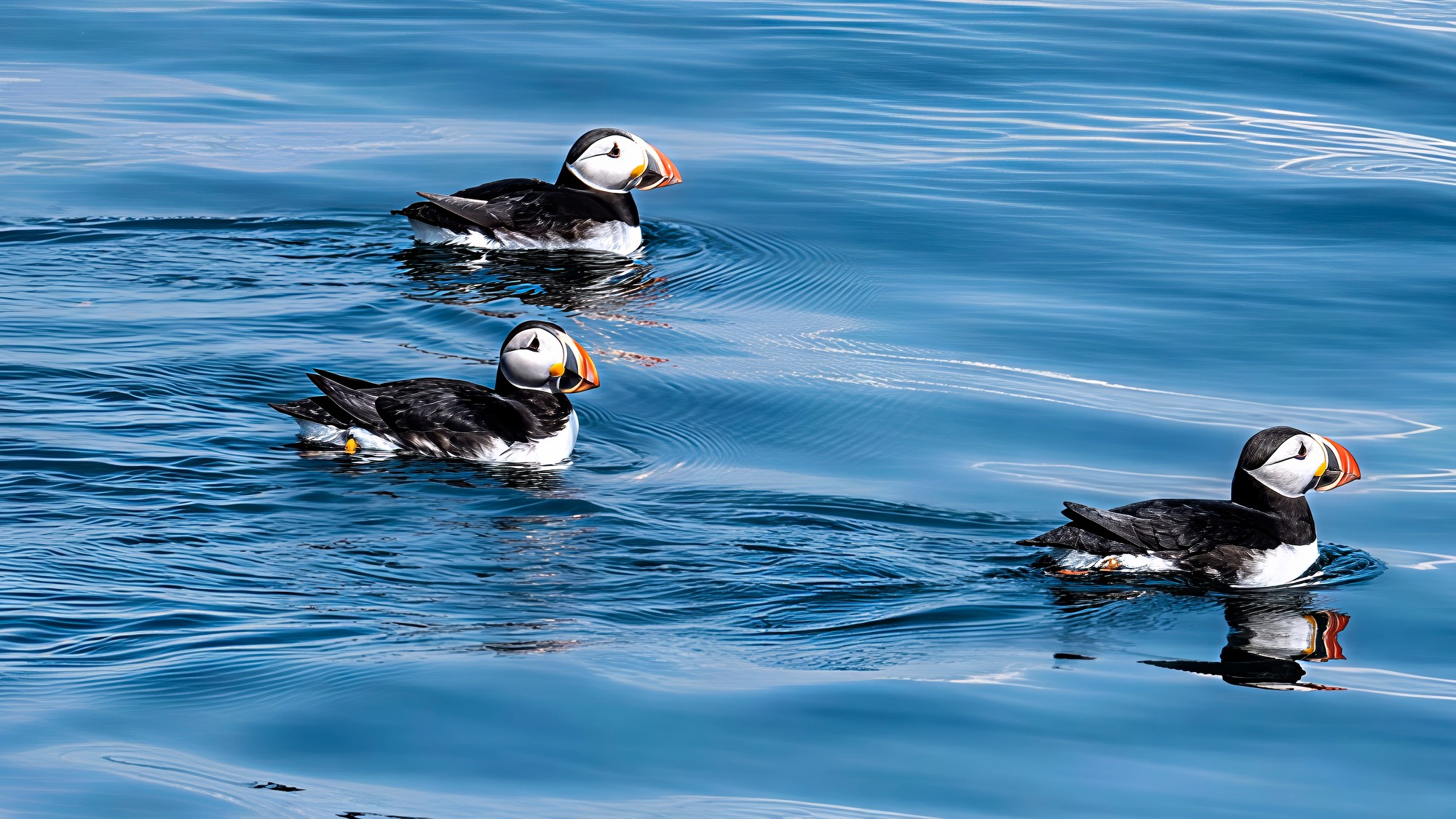
Atlantic Puffins
Fratercula arctica
Nicknamed "sea parrots" for their colorful bills, puffins are bucket-list birds for any birder. These three were photographed on a summer ocean excursion — a special trip beyond the farm.
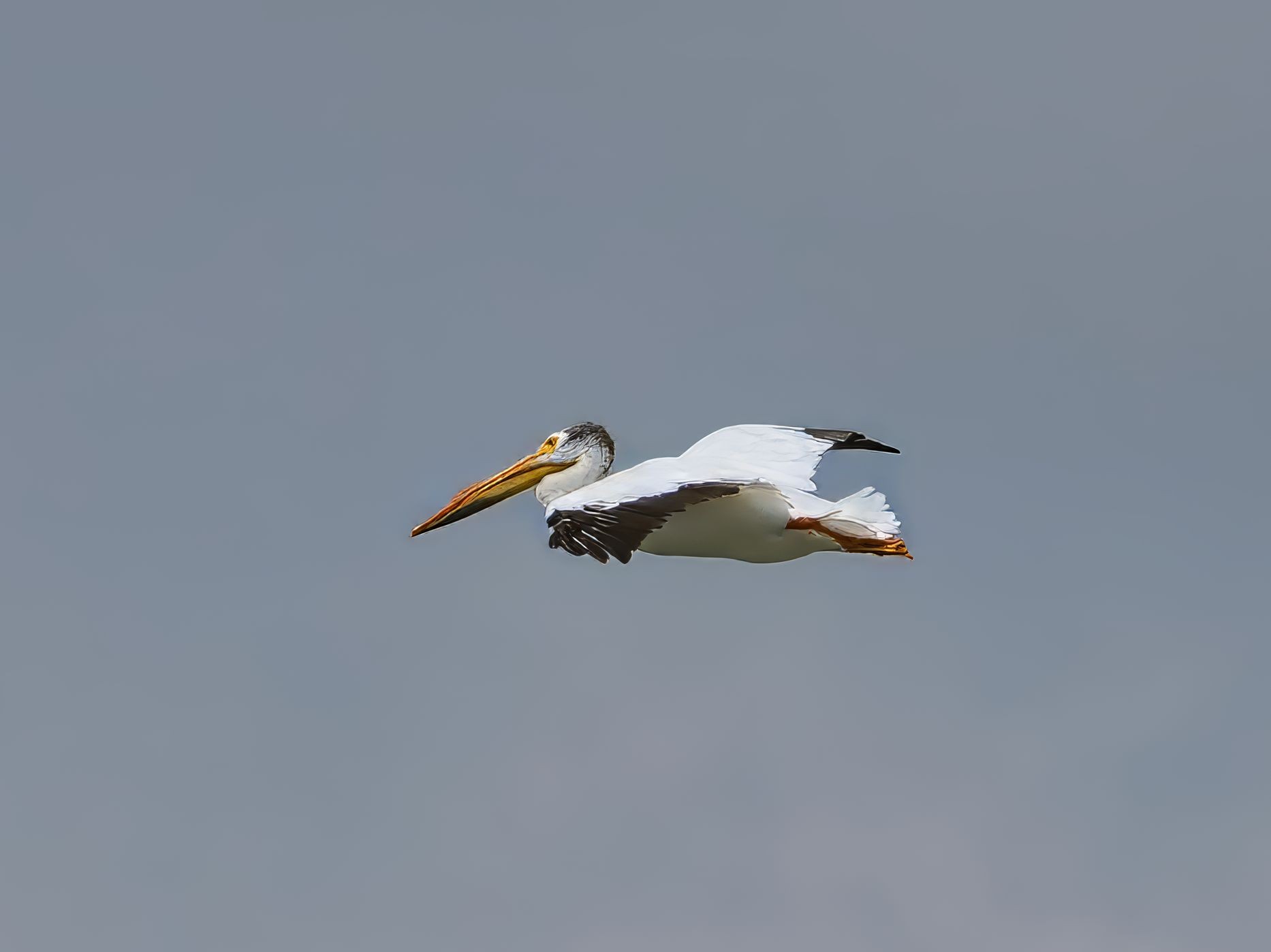
American White Pelican
Pelecanus erythrorhynchos
One of the largest birds in North America with a 9-foot wingspan. Unlike the Brown Pelican, this species herds fish cooperatively rather than diving. A spectacular sight in flight or swimming in formation.
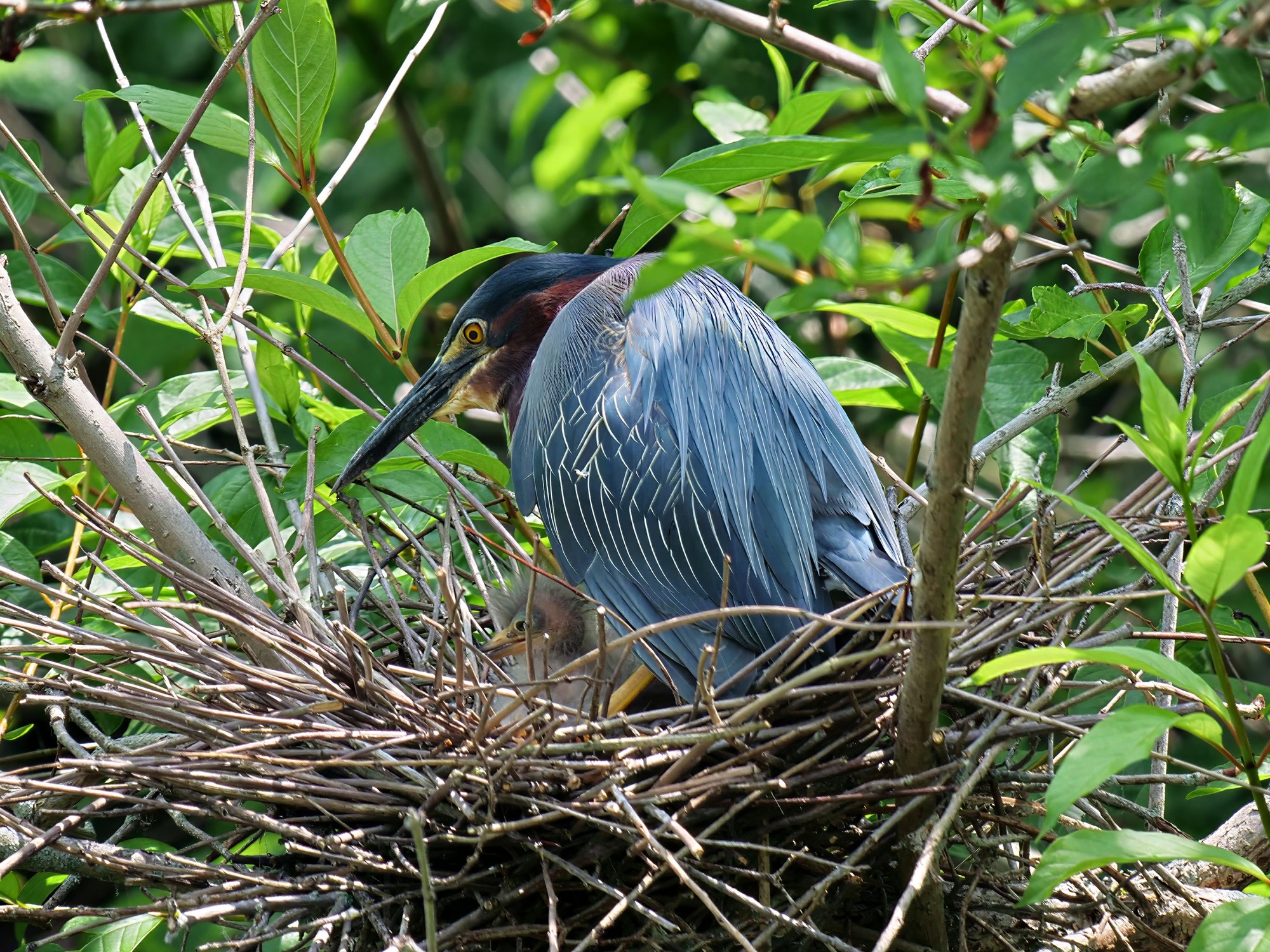
Green Heron
Butorides virescens
A small, secretive heron of wooded streams and ponds — and one of the few birds known to use tools, dropping bait onto the water to lure fish. This adult was photographed tending its nest with a chick, and hunting in the cattail marsh.
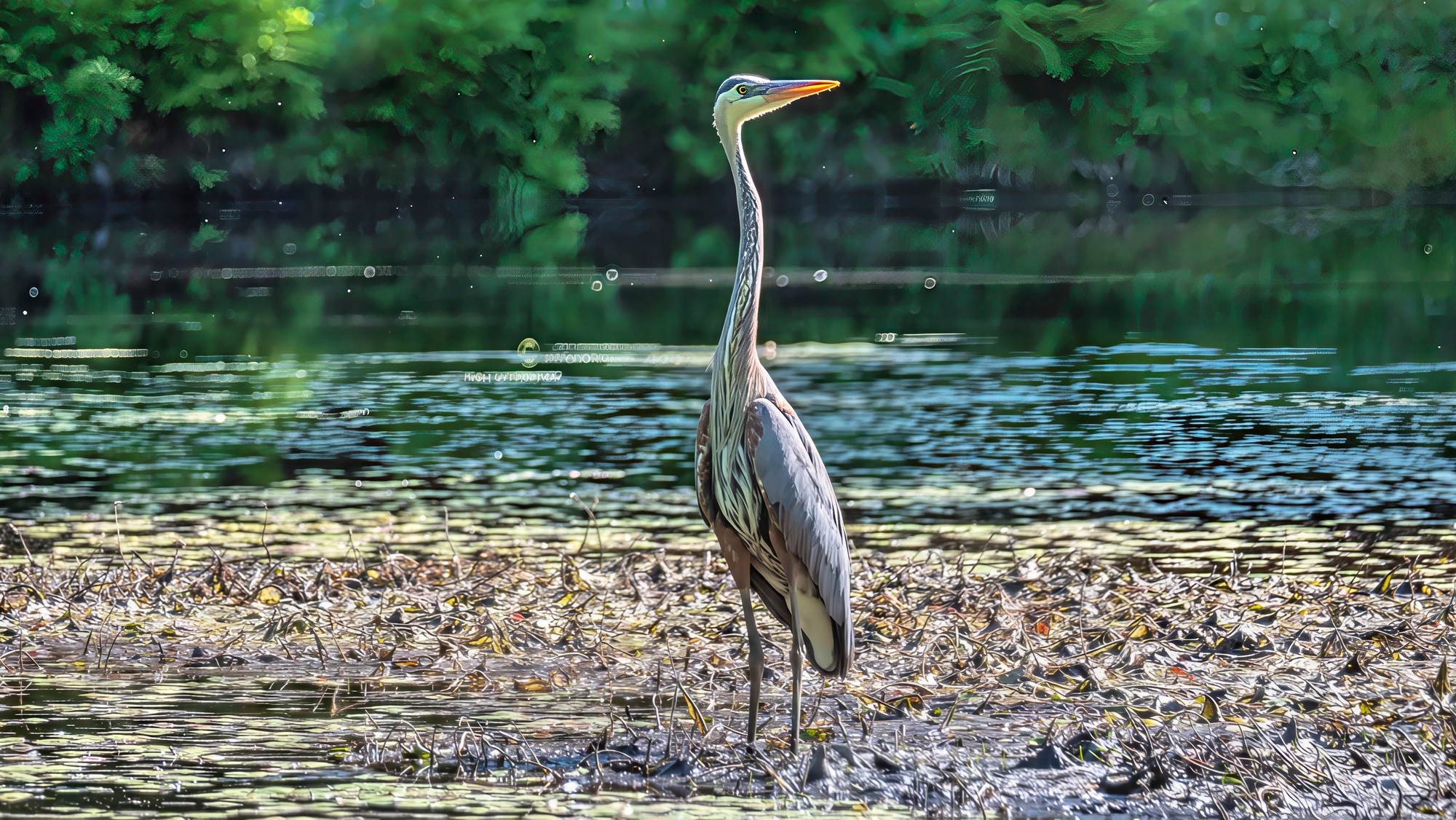
Great Blue Heron
Ardea herodias
North America's largest heron, standing nearly four feet tall with a six-foot wingspan. A patient, solitary hunter that can stand motionless for minutes before striking with lightning speed. This one was photographed at the water's edge, neck stretched tall and eye tracking the shallows.
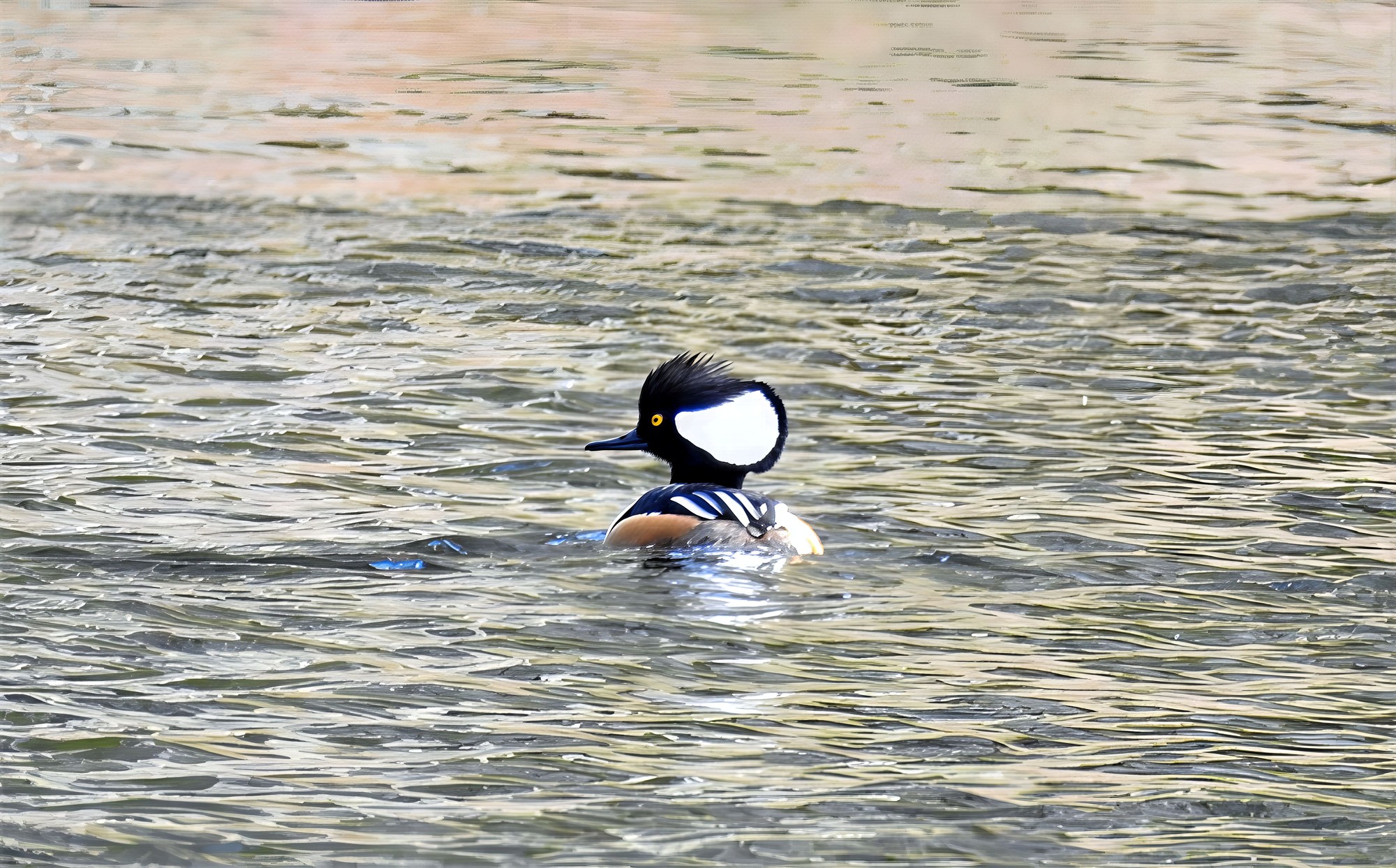
Hooded Merganser
Lophodytes cucullatus
America's smallest merganser and one of its most dramatic — the male fans his bold black-and-white hood into a spectacular crest to impress females. A cavity-nesting diving duck of wooded lakes and streams.
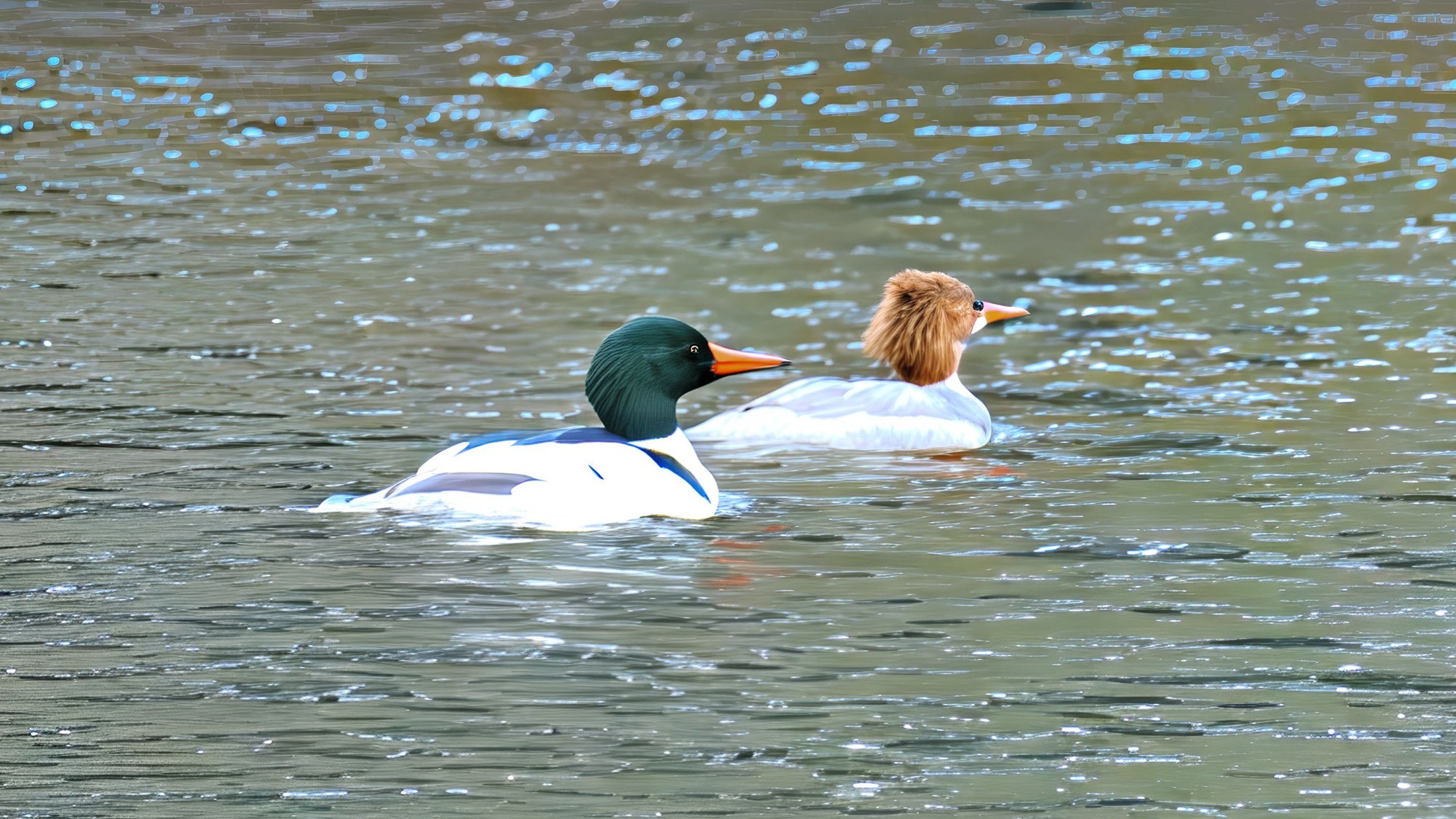
Common Merganser
Mergus merganser
North America's largest merganser — a sleek, powerful diving duck of clear rivers and lakes. The male's iridescent green head and clean white body contrast beautifully with the female's rusty-brown crest. This pair was photographed swimming together in calm water.
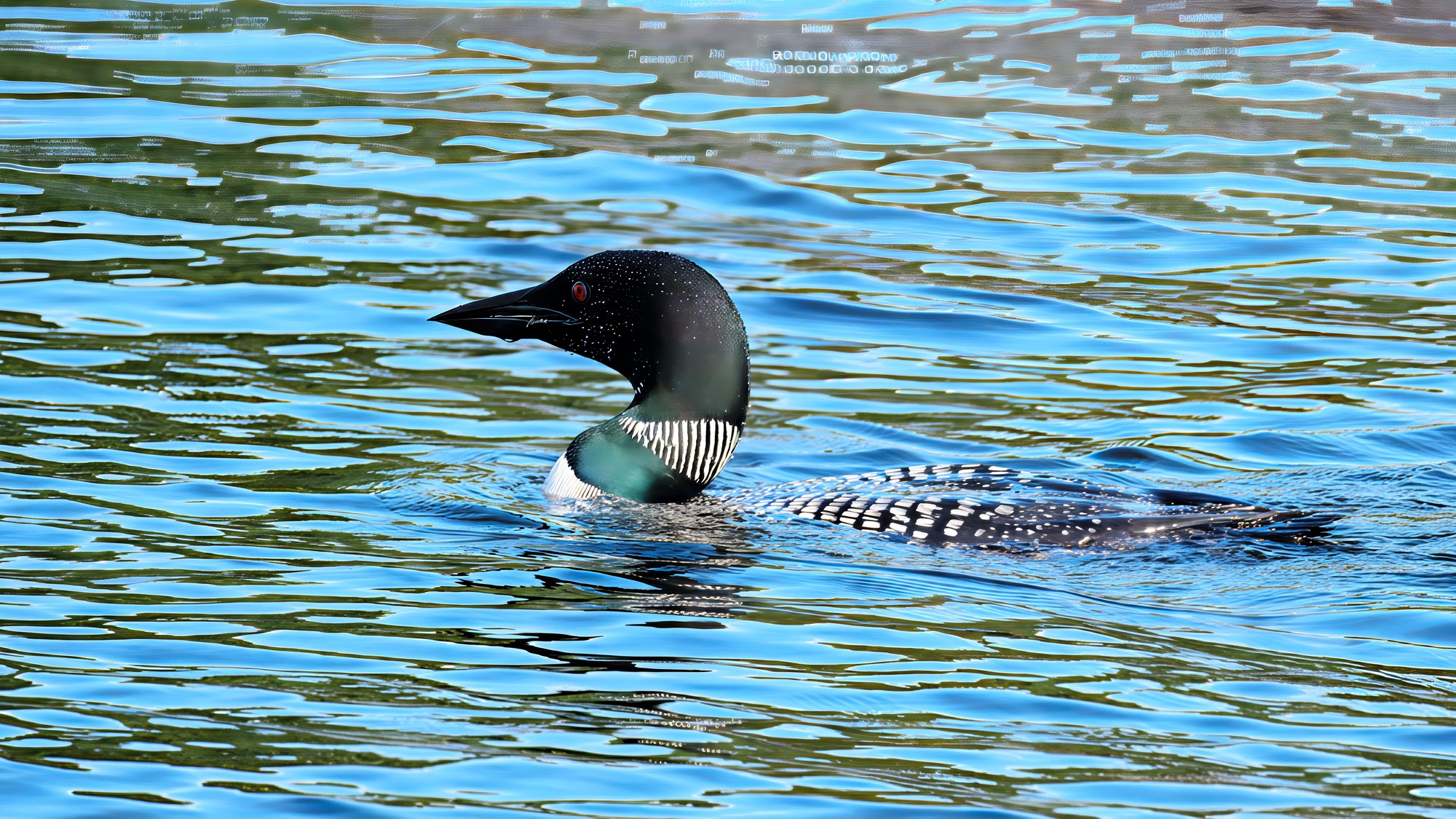
Common Loon
Gavia immer
The haunting wail of the Common Loon is the voice of the northern wilderness. In breeding plumage — checkerboard back, black head, red eye — it is among North America's most striking birds. An expert diver that can plunge over 200 feet.
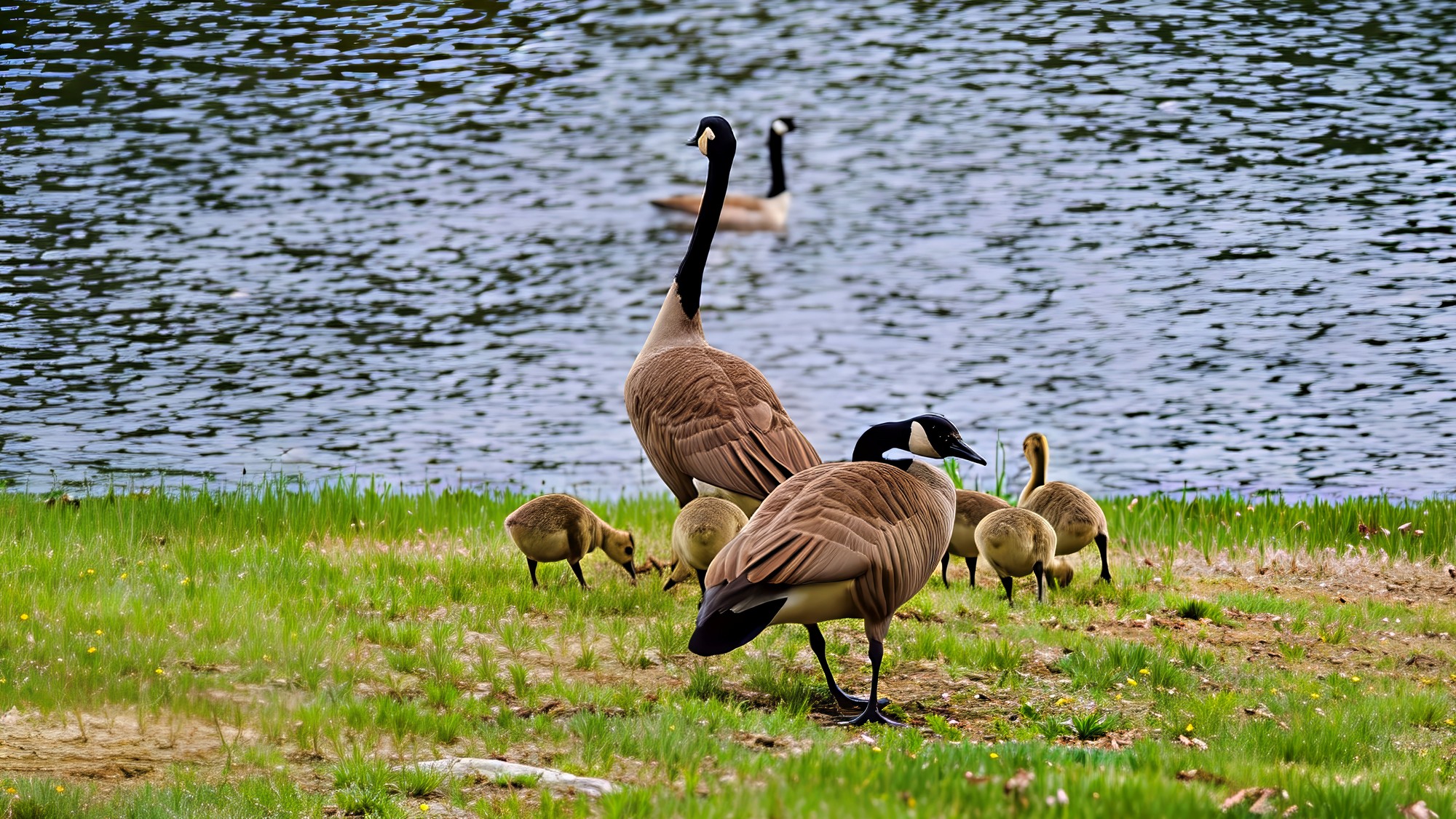
Canada Goose
Branta canadensis
Perhaps the most familiar waterbird in North America — the Canada Goose with its signature black neck stocking and white chinstrap. Parents are fiercely devoted; goslings follow their parents single-file from the day they hatch.
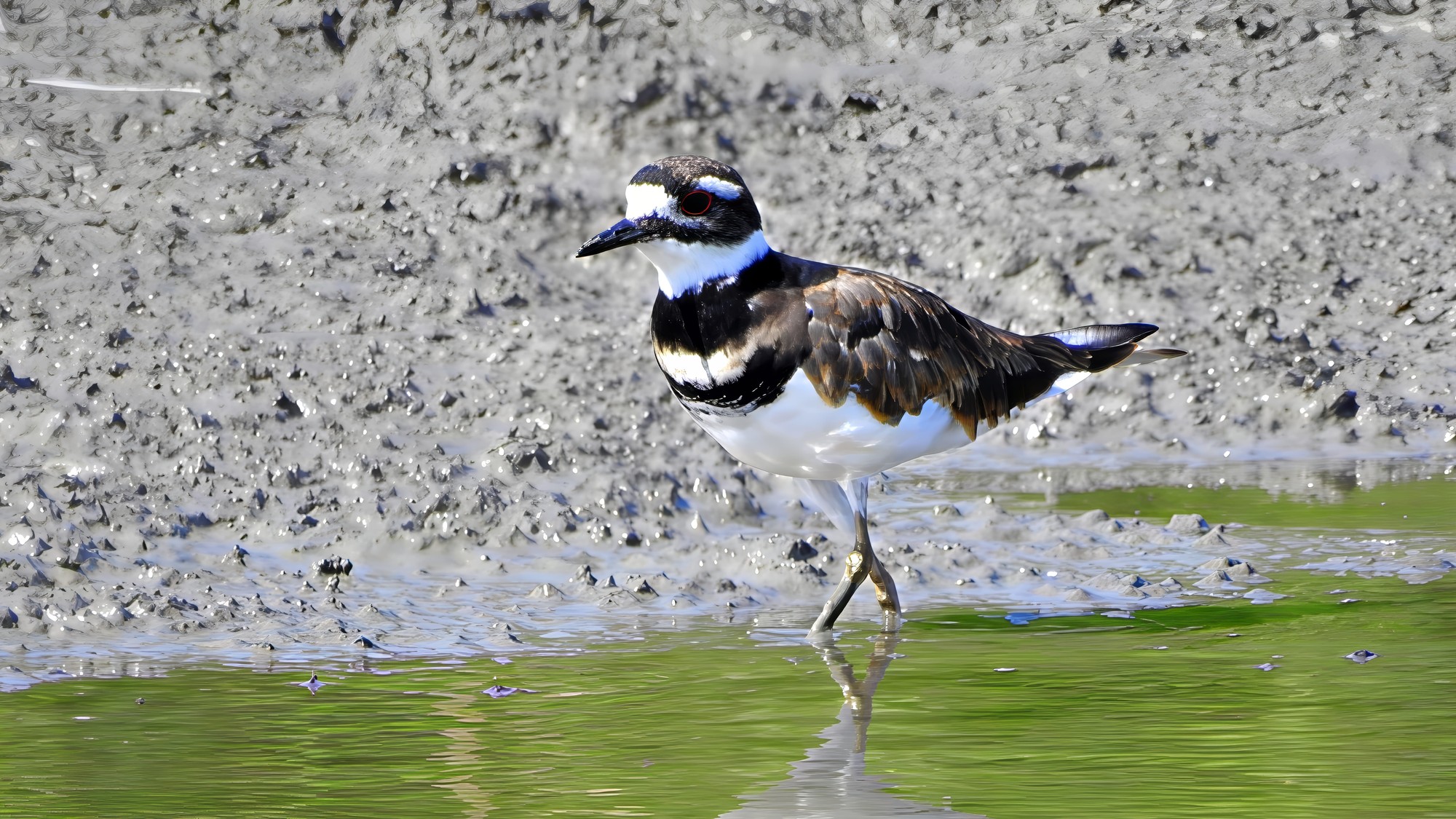
Killdeer
Charadrius vociferus
Named for its piercing "kill-deer" cry, this bold plover is found along mudflats, shores, and even gravel parking lots. Famous for its "broken wing" distraction display near the nest.
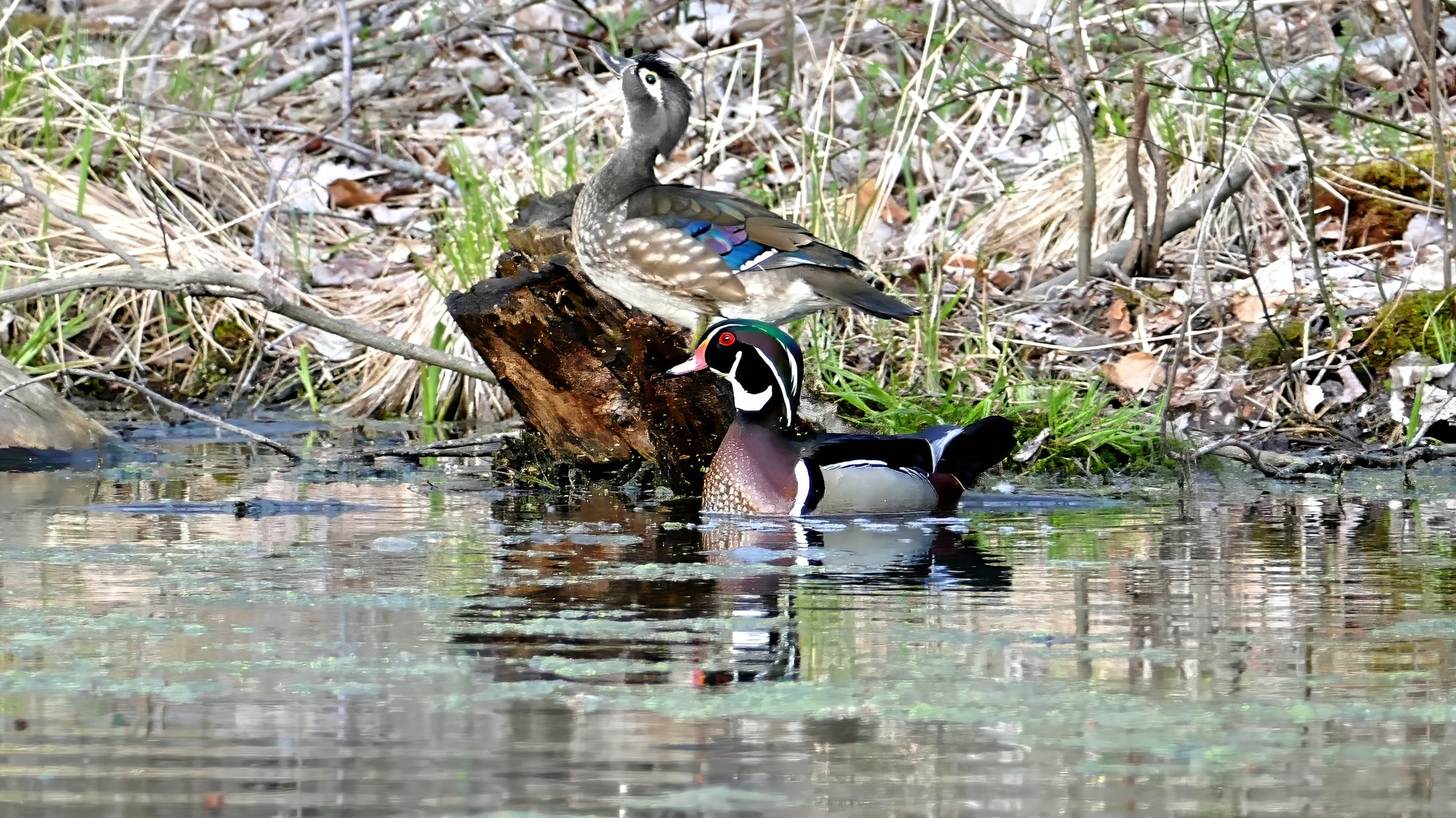
Wood Duck
Aix sponsa
Often called the most beautiful duck in North America — the male's iridescent green crest, red eye, and intricate chestnut-and-white patterning look almost painted. This pair was photographed at the farm pond: the drake swimming in full breeding plumage while his subtler but equally elegant hen watches from a log.
Showing 35 of 35 species — check back as our collection grows!